Such references got me thinking about the key role SAML plays in the emerging identity infrastructure and key deployments.
Dare I suggest

I guess this would be more speculative

Tags:


I am disappointed that Paul missed another approach mentioned in the document ( or may be I am missing something). Pat rightly identified the 2 typical models that can be implemented and Paul extended it by coming up with all the permutation and combinations using various components. But all the model discussed look to be various permutation of just one model i.e. Authorization Pull Model where the resource is resposible to connect to the Decision Point to get the result. I think a hybrid of the "Authorization Push Model" and Local policy evaluation is more appropriate for the federation model where along with the identity the authorization of subject itself will flow to the other domain.
It’s important to note that the above diagrams are intended to show configurations of components, not information flows. For instance, for any configuration that involves the sharing of subject attributes, these may be included in the actual request to access a resource, or they may be requested by the AEF (or other component) from the subject after receipt of the access request,
Hey Darlene, is one of them contestants named 'SAML', no wait, they must mean Samuel. Is there a 'Samuel' on the show?
No? well how 'bout a 'Uri'? Jeez, why are they putting one of those damn Russkis on the TV?
 How nice, save me the effort of remembering my model by allowing me to provide the VIN and have them do the work. It's only been 5 hours and I'm already impressed by their customer service.
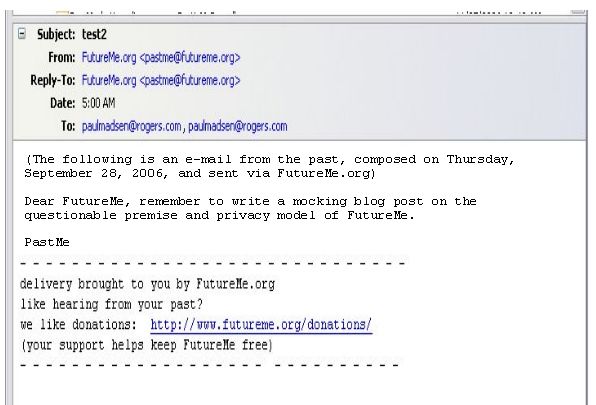
We may use your vehicle VIN at some point in the future, for reasons as yet undetermined but nevertheless still governed by your acceptance of this policy.
Does Federated Identity sometimes require Federated Authorization? If so, how come this isn't ever discussed. Maybe you could address in future blog entry...As ever, Eve is special, she rated a slightly modified version.

Patients also need to be able to better coordinate and manage their own health information. We believe that patients should control and own their own health information, and should be able to do so easily. Today it is much too difficult to get access to one's health records, for example, because of the substantial administrative obstacles people have to go through and the many places they have to go to collect it all. Compare this to financial information, which is much more available from the various institutions that help manage your financial "health."Currently, Google has no credibility here. They could buy some though.
 Normal caveats about over simplification, not drawn to scale, etc.
My boss is aIs it true Dick drives a Pinto? and he's actually *A Prestige?
Canadian
from BC
specifically
Vancouver
where they'll hold the Olympics
in Gastown
who's male
42-years old
which means he's over 25
and under 65
who went to UBC
and is a CEO
and founder
and bartender
and belongs to the Vancouver Entrepreneur Forum
and is a blogger at blame.ca
who banks at HSBC
and flys Air Canada
and is a Star Alliance Gold member
who likes Macs
At Symlabs, we see our customers using AuthnContext for information about how a user was provisioned in the first place, and also how the user was authenticated for the current session.and
Symlabs was instrumental in getting the mobile authentication contexts defined, because our wireless operator customers requested our participation in this area.Indeed, I remember well the after-hours session (Paris?) with Sampo thrashing out the mobile classes for ID-FF.
 I think this is perfectly appropriate as the ceremony he provides is exactly the same were the protocol OpenID and not SAML. Put another way, it's in the XRDS doc that the fact that the IDP speaks SAML and not OpenID is advertised, and not in the UI.
 How did Sxip determine that my wife calls me "joesixpack"? Is appending 'et' designed to inhibit correlation?
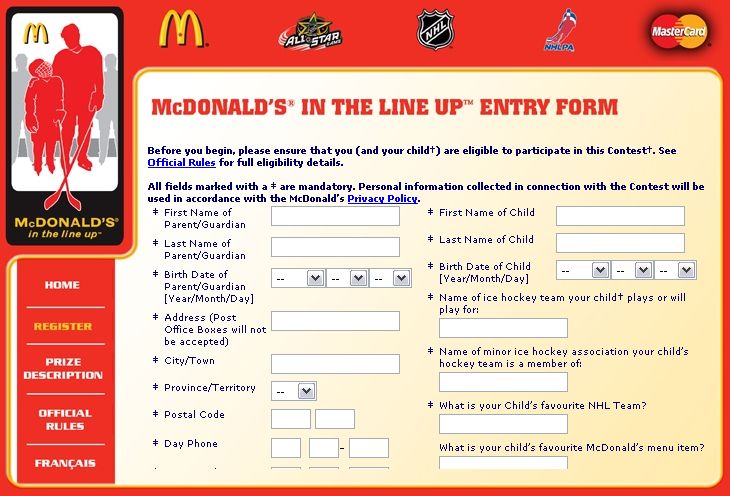 They'll have to get into professional hockey the same way I did - through countless hours of practice, complete commitment, and learning how to sew those nice skirts.
 Conor takes exception to Johannes's 'Identity Triangle' diagram.
 Lotto - Zo werkt Lotto Government Accredited Licensed lottery promoters. International Promotions/Prize Award Department.I replied with the following (from a suitably disposable address and after obfuscating above indices):
This Lottery is approved by the Netherlands Gaming Board and also Licensed by the The International Association of Gaming Regulators (IAG international emails. held on the 29th November, 2006.all winnings must be claim not later than Decembre 7th, 2006, after this date,unclaimed funds will be returned to the Lotto.
Your email won the lottery.For a total pay out of €1,000,000. no tickets were sold but all email addresses were assigned to different ticket numbers for representation and privacy.
Please remember to quote your reference number and batch numbers:
1, Batch 9484-9116-0076
2, Ref: 637405467-Nll
3, lucky numbers 1-0958-31-444
To file for your claim, please contact
**************************
Advocate Faber Dutchs
Tel: +31 -619 255 080
Fax: +31-84-728-9656
email- bejesbejes200@aim.com
From the desk of Renry HootLet's see if they are even set up to deal with responses.
Dear Sirs, thank you very much for the good news, I am ecstatic to hear about my good fortune. I have never won anybody before (Mrs. Hoot as the exception of course), much less 1 million Europeans!
Before we proceed I do have some questions on which I would appreciate clarification:
1) for those Europeans I have won, am I responsible for their travel costs from their respective homelands to mine? I do acknowledge that, even with this expense, I stand to benefit greatly from their subsequent labours, but I do need to budget accordingly.
2) To what standard of living are my prizes used? I do plan of course on providing them the base necessities but don't see the sense of spoiling them with luxuries beyond that to which they are accustomed. For instance, might a typical European find soap and similar toiletries an unexpected and unwelcome oddity? I'm sure you'll understand why I'd prefer to save this expense if possible.
3) Canada can be a cold country. Perhaps you could begin the conditioning process by occasional walk-in freezer sessions? If you could simultaneously broadcast French language programs to them that would be extremely helpful - it is that unique combination of shivering and strange vocalizations that typifies my country.
4) Related to above, any French language skills would be a welcome bonus (unless of course you are shipping me Frenchmen. If this is absolutely necessary please keep them to a minimum - Canada is already quite socialist enough Ha-Ha).
Thanks again. I'm very excited and happy to be the new owner of so many Europeans (although the task of choosing new names for them is daunting!)
Gratefully yours,
Renry Hoot
p.s. I wonder if your lottery might be affiliated with a similar one in Asia? Is there any precedent for trading some or all of my Europeans for Asians? I would be of course be willing to consider a considerable exchange rate, perhaps 5 to 1? Please advise if this is a possibility (and whether a donation to a 'charity' of your choice might expedite the process).
p    = 7 (a small prime number)
p- 1 = 6
g = 2 (OpenID default)
X = g ^ x mod p
X = 2 ^ 5 mod 7
X = 32 mod 7
X = 4 (the remainder when you divide 7 into 35)
Y = g ^ y mod p
Y = 2 ^ 4 mod 7
Y = 16 mod 7
Y = 2 (the remainder when you divide 7 into 16)
RP calculates        IDP calculates

s = Y ^ X mod p      s' = X ^ Y mod p
s = 2 ^ 4 mod 7      s' = 4 ^ 2 mod 7
s = 16 mod 7         s' = 16 mod 7
s = 2                s' = 2
The conclusion?
Proprietary standardization seeks to increase a firm’s market share (pie sharing).
Open standardization seeks to increase the size of the market (pie expansion).
The results show that financial markets respond positively to announcements of proprietary XML schema standardization, but not to those of open XML schema standardization.How encouraging.
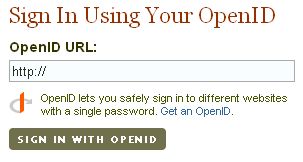 Most user already sign-in to different sites with the same password. Is 'safely' sufficient distinction?



 I expect the shirt Pat wore accounts for his inflated ratings.
 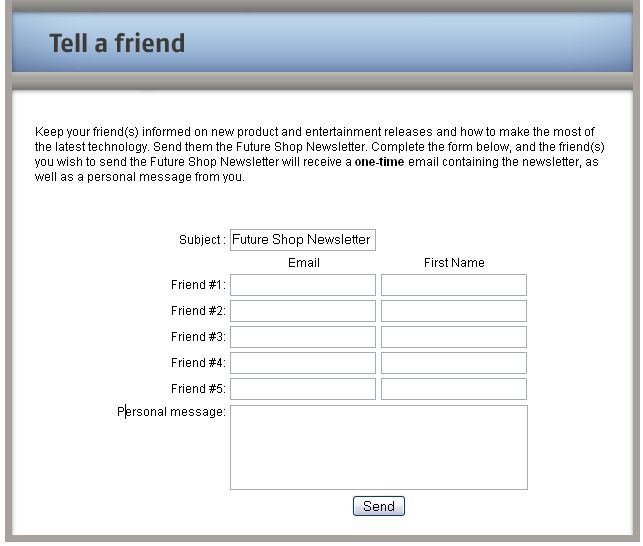 Who does this? Who is so insulated from dealing with their own spam that they are oblivious to the risk that giving away email addresses would mean for their friends or family?
Overall, as far as I can tell, there is nothing in this specification that is not easily handled using the SAML Authentication Context structure and so I don't understand why they didn't just adopt that model as-is (and the SAML model clearly handles much more than the limited cases supported currently by this proposal). At the minimum, this document should be a limited profile of what portions of the SAML model they want to use.The proposal's acknowledgement of the similarity between AQE and SAML AC isn't enough.
This is all you hear from or about SAML in the entire specification. There are no other references to the SAML authentication context, nor any use of the structures or capabilities of the Authentication Context. I'm not sure why this is even mentioned here if they aren't going to make use of any of the SAML work in this area.Personally (and I'm not speaking for David or Avery) I see OpenID leveraging SAML Authentication Context as a desirable end-state (as do I seeas desirable SAML possibly leveraging those pieces of OpenID for which there is no comparable existing functionality in SAML 2.0) and hope that AQE gets us closer to that end-state. Afterall, you can't converge if you don't have two parts to align.
The Security Assertion Markup Language (SAML) Authentication Context ([SAMLAC] (Kemp, J., “SAML 2.0 Authentication Context,” 2005.) defines mechanisms by which SAML Service Providers and OpenID Providers can discuss the context of an authentication assertion.
The authors acknowledge the similar motivation between SAML's Authentication Context and this extension. Where possible, we have attempted to stay aligned with the SAML Authentication Context model. Indeed, we see this topic as a likely area of convergence between OpenID and SAML. More work is needed here.
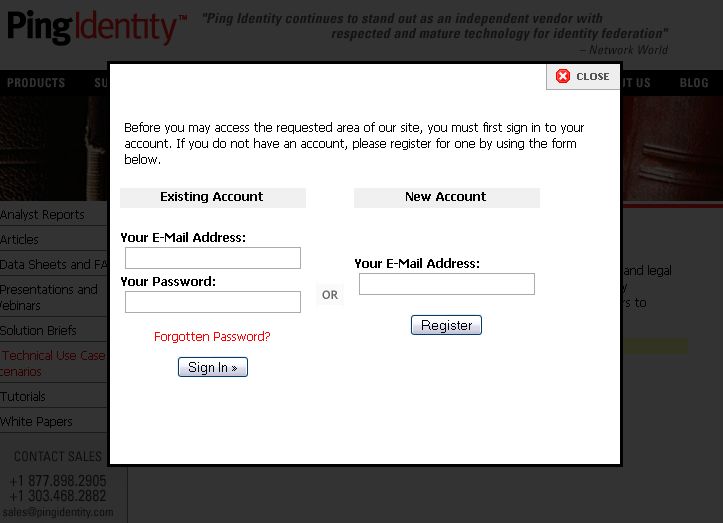 Not sure what to make of this. One of the purported justifications for the Cardspace 'greying-out' is to produce a visual effect that would be difficult for a phish site to recreate. But, any phish site could recreate the effect within the browser and it's modal only within the browser (actually only within the tab).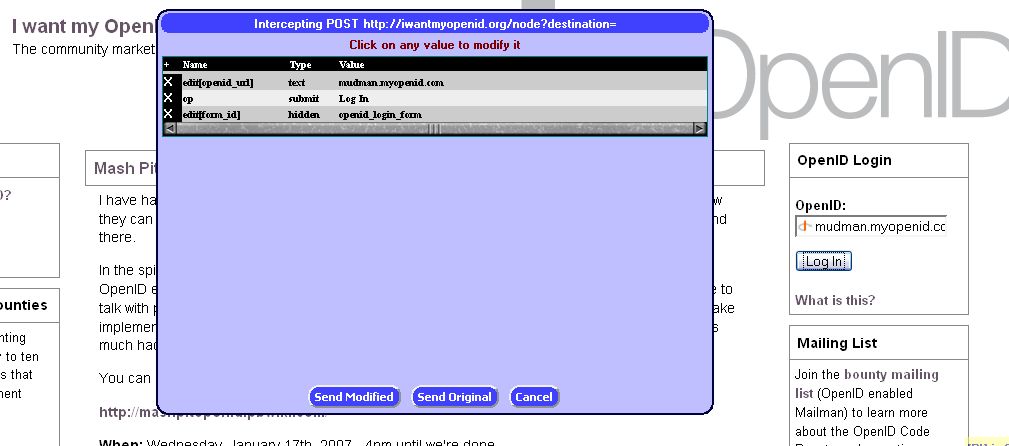


 I thought it might have been a 'To Do List' GreaseMonkey script I was trying out so I uninstalled that. No change. Cleared cache and cookies. No deal. Using an 'https' URL resolved the issue.
provides a fast and convenient way for people with food allergies to print off "allergy cards" for use eating out, while travelling, etc.

And then there are the inames. I can't figure out when exactly I get to start using my iname to authenticate, and if I do, do I still need to specify a provider? I remember from IOS Santa Clara that inames & open IDs are merging for OpenID 2.0, I just can't figure out if that means now, or soon... luckily I get to ask all these types of questions at IIW in a few weeks :)As I understand it, in OpenID 2.0, if you provide the RP your i-name, the RP would use XRI resolution to retrieve an XRDS document, and from that extract the appropriate IDP endpoint for redirection.
Actually, it does appear to do more than this. When I leave 'LiveJournal User' selected, and provide my Verisign PIP OpenID URI, I get an error message of 'Couldn't find OpenID Server'. When I switch to select 'Other OpenID' and provide the same URI, I am successfully directed to Verisign's PIP.
From looking at the code for the plug-in, the only real purpose of the drop down box is to change the icon within the field next to it to match the type of server you will be using. Other than changing the icon, it serves no real purpose.
 It's not clear to me why a user would need to both supply the URI as well as indicate the IDP through the select list?
as each Freedom Fund nears its target date, the investment mix gradually gets more conservative.As you near the time where you will be removing funds, the asset allocation changes to minimize risk.
Begin by studying various SAML Profiles, e.g. those given in [[SAMLProf]] and [SIP-SAML]. One will likely find the SAML Technical Overview whitepaper [[SAMLTechOvw]] helpful in this endeavor. It provides a detailed, illustrated expose of several of the SAML Web SSO profiles.Interestingly, when I view the document, a plugin Skype (yes Jeff, I know it's proprietary) installed when I recently upgraded renders a phone number in one of the XML examples as a 'click to call'.
 Presents some intriguing possibilities for smart clients.
  Aldo has an interview with Drummond Reed, Johannes Ernst, and Chris Messina talking about the importance of usability design and user experience to OpenID.
 If there exists a region of anonymity relatively devoid of identity, identifying information from the environment surrounding that region will attempt to redistribute itself so as to fill said void.As an exercise I leave it to the reader to develop the "'Surfing Adult Sites at Work' Corollary".
Transaction authentication is software residing on the enterprise security servers that monitors, in addition to the successful use of user id and password the:What if the scope of the 'transaction' were broadened, i.e. to include behaviours performed at an SP after the user SSO'd in from an IDP?
- IP address the user is coming in from
- Users geolocation
- Computer hardware the user is using
- Time of day
- Previous user pattern of behaviour
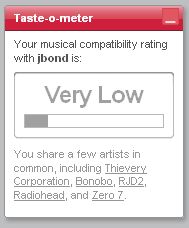 Julian's post alerted me to his Last.fm profile.
 I got to say that I'm a sceptic on this. I don't think that there has been an existence proof for the successful combination of SAML and Web 2.0: putting control in the hands of the end user — the essence of Web 2.0 — is not typically compatible with the way SAML projects tend to end up.The argument appears to be 'because SAML can be deployed in ways that don't directly/explicitly/visibly empower users, it can't be deployed otherwise'. Similiarly, because HTML can display porn, or violence, or politicians, it can't be used for more noble purposes.
 Johannes points out the Open Healthcare Manifesto.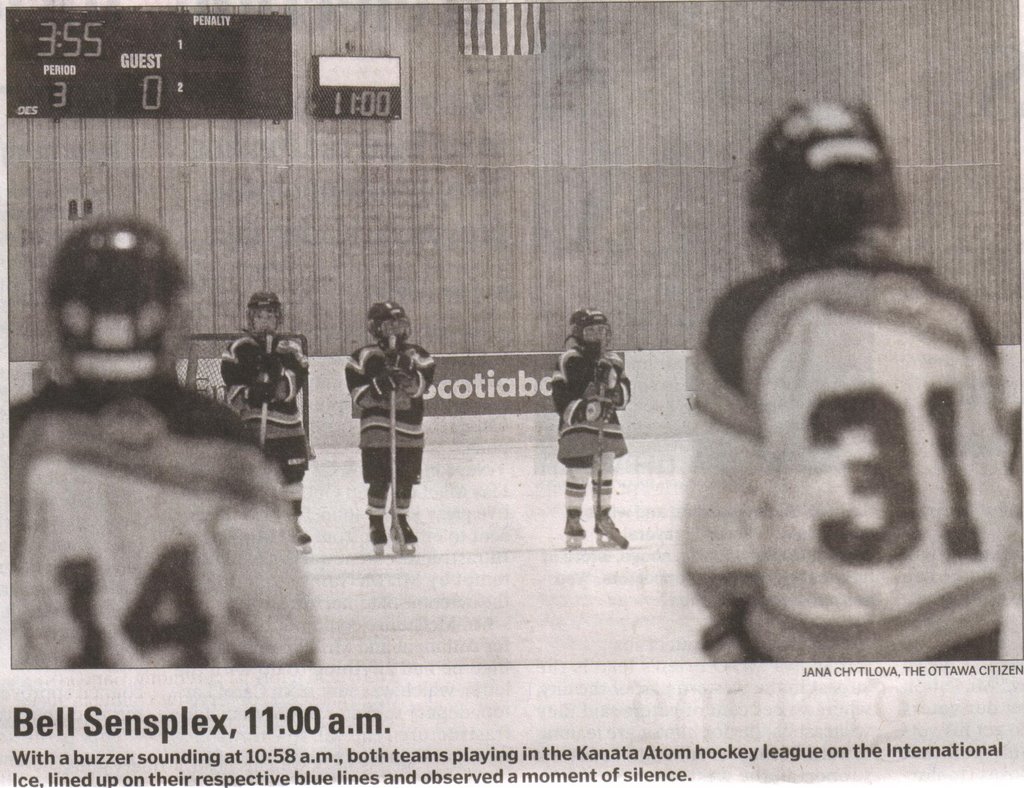
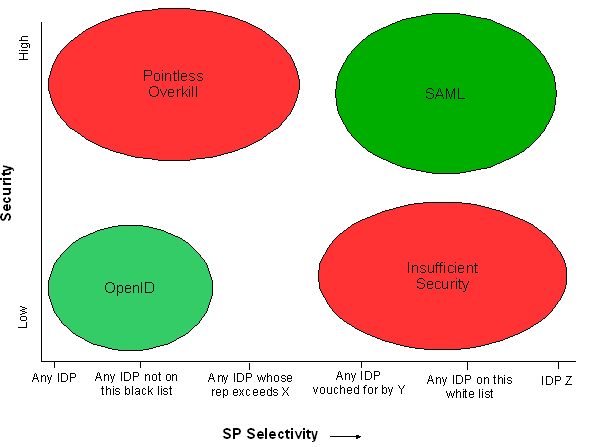 So, both SAML and OpenID seem to have discovered distinct and valid islands. Nice. But, seems to me that both of late are exploring moving beyond these domains. OpenID is allowing for additional security options to OpenID 2.0, SAML to allowing for less security through the proposed SimpleSign binding.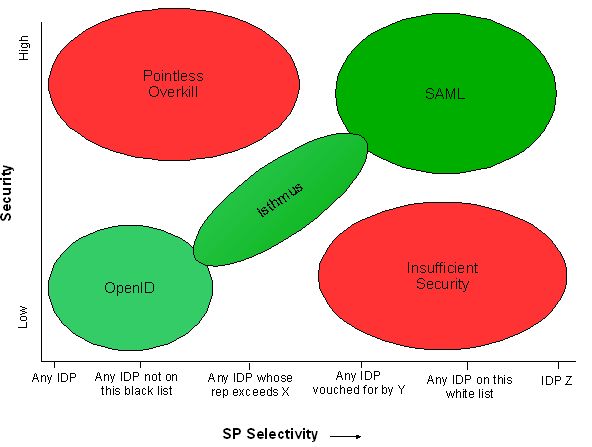
Differentiating between (and accounting for both) how the user was registered and how they were authenticated is something SAML's Authentication Context makes possible, most notable examples of which are the 4 mobile targetted AC class URIs that differentiate based on whether the user has a contracted account or is pay-as-you-go.
about the method of identification at the point of enrollment and the method used when authenticating
The RP doesn't have to bother but if it chose to it could keep track of those providers that provide strong auth and act appropriately when those IdP's are the ones doing the authentication.This could work if an IDP only supported a single authentication mechanism. If not, the RP wouldn't know which was used for any given assertion.
What higher level value is a claim of strong auth from an IdP when there is no trust between the IdP and the RP anyway?Indeed, but if the RP doesn't trust the IDP, its unlikely to care about how the IDP authenticated the user. And if the RP doesn't care, why would the IDP go to the extra cost and effort?