It is forbidden to wear head sets connected to a mobile device such as a CD player.CD player? What percentage of music liseners are playing CDs?
It's time for Air Canada to update their admonishments to reflect current technology.
It is forbidden to wear head sets connected to a mobile device such as a CD player.CD player? What percentage of music liseners are playing CDs?
openid.mode:error openid.error:Malformed trust_rootNo prob, I have others. When I tried my mudman.pip.videntity.org OpenID identity I saw this from Verisign
Application Error - Sorry, it appears that you have found a bug. Our developers have been notified and are at work to correct the situation.Running out of options, Flickr was next.
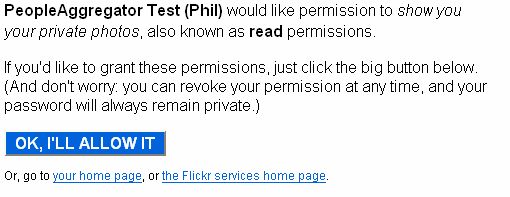 So somebody named Test(or is it Phil) wants permission to show me MY pictures?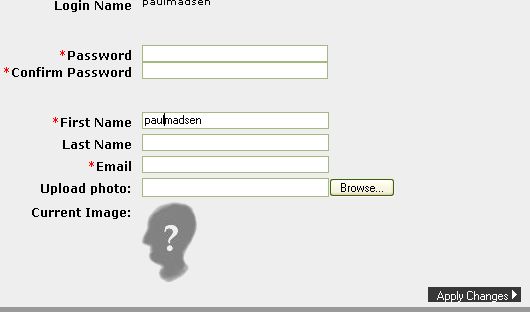

You know what you want to say, but sometimes the words just don't come out right. We can help. Get a brand-new custom-written profile in your own voice, and see what a difference it can make.Would this be 3rd party or self-asserted identity?
 This blog URL converted into a QR code.
This doesn't jibe with what I know (or misunderstand) of Cardspace.
In the privacy space a colleague of my shared an interesting perspective. Most corporations, especially in the B2C space, have considered user/customer identity data to be an asset. Knowledge about their users that could be leveraged for any number of marketing opportunities. With the rising concerns and increasing regulations around privacy this perspective is, or should be, starting to change. This “asset” is now becoming a liability. Data about people (corporate people and consumer people) is always going to be required to do business, but how do we get that while at the same time minimizing liability? Enter the Infocard concept. It would seem we now have a means to establish authoritative data about the user, but give it to the user for safe keeping.(emphasis mine)
 Jeff Hodges & Scott Cantor have created a proposal for a new SAML Binding - most notable for its optional use of XML Signature.
The central thesis is that for various implementation and deployment scenarios, reliance upon XMLdsig is an inhibitor.I think of this binding as the SAML community turning down the security dials on the protocols (or more accurately ensuring that they can be turned down in an interoperable manner) - lower settings appropriate in some situations.
 Pete Rowley presents a nice pithy descriptor for user-centric identity - based on the idea that the prime (sole?) criteria for an identity flow to warrant the term is that it occur 'through' the user - and so Pete suggests 'people in the protocol'.