Tuesday, May 30, 2006

What a nice gesture!

It's easy these says to be somewhat cynical about people and their intentions. That is, until out of the blue, somebody does something for you simply out of the goodness of their heart. Something like this blog comment I received from a friend named 'Anonymous'.
Hi, i was looking over your blog and didn't
quite find what I was looking for. I'm looking for
different ways to earn money... I did find this though...
a place where you can make some nice extra cash secret shopping. Just go to the site below and put in your zip to see what's available in your area. I made over $900 last month having fun!
Friend, thanks for thinking of me.

Sharing with a total stranger what seems certain to be a license to print money, now that's just plain ol' nice!

As a matter of fact, I think I'm going to perpetrate a similar "random act of kindness" and forward on your message to all my friends. I hope it gives me just a fraction of the satisfaction you must get from sharing this inevitably lucrative info.

YACCP - Yet Another Conor Cahill Post

Kim Cameron chides me for what he believes to be inappropriately cast aspersions on Conor Cahill.
I think if Paul had been present at the session he would actually have appreciated what Conor had to say. Objectivity and realism in sizing up deployment blockers, and transparency in setting expectations, is what will lead to success.
A couple of points in my defense:
  1. Conor and I have a long established tradition of casting aspersions on each other. When I think of my involvement with Liberty, I divide it 2 periods - that initial period during which I was too intimidated by Conor's expertise and strongly voiced opinions to challenge him, and then the last couple of weeks.
  2. As quoted by Phil, Conor's statement about non-enterprise deployments could be misinterpreted. Conor doesn't blog so I thought I would give him an opportunity to clarify/expand by commenting on a post of mine. I chose sarcasm and satire in order to goad him over the pain barrier of making such a comment.
  3. This was part of a new marketing campaign by Liberty to put a more human face on the organization. New logo soon.
  4. The end result of an individual so strongly linked with Microsoft's identity strategy defending a Liberty-proponent (rather than laughing with delight over what might appear to be LAP-internal squabbling) and what this might imply for the future (or even just for the sake of irony) must surely justify some small artistic excess in my original post?
I'll be seeing Conor at a Liberty meeting in Washington tomorrow. Can't wait.

Motion sensing for authentication?

Wired has a piece on various potential applications of motion sensors - the latest of which is the Nike shoes/Apple iPod integration.

Why not put a sensor in a hardware token? The something you have would be the token, and the something you know would be some programmed sequence of motions, e.g. left-right-left-up-down.

Might make people look like nervous 3rd base coaches or Catholic priests conducting a Mass. That would be a nice humourous bonus for bystanders.

Or perhaps the sensors will eventually be sufficiently smart to distinguish the owner's gait from that of anybody else? Could it recognize my bad left knee? Recommend appropriate physiotherapy?

Rob Zuccherato - Security in Depth

My ex-colleague Rob Zuccherato at Entrust has started a blog.

Rob's office at Entrust was next to mine and I probably wore the carpet thin walking over to ask him insightful and probing questions about crypto and security such as:
  • 'so if elliptic curve crypto is good, surely circular curve crypto would be even faster and more efficient?'
  • 'So what does RSA stand for again?'
  • 'I've locked myself out of my office, can you phone security for me?'
I expect Rob's blog will serve to reopen this educational channel for me. We'll see how long it takes him to close off comments.

Rob, in your latest post entitled "Does key size matter?", I think you missed a juicy double-entendre. As you blog more, you'll discover that a racy blog title can sometimes drive readership right past the magic '10 hit' threshold. And that's when the money starts to flow.

SDO Tycoon

The popularity of Tycoon games (e.g. Zoo, Rollercoaster, Moon, Mall, Lemonade, Monopoly etc) with my kids makes me think there is an untapped opportunity ....

SDO Tycoon

SDO Tycoon delivers a fantastic standards development experience! Immerse yourself in first-person views as you take your specifications from initial smoke-filled rooms through industry stalling drafts to eventual standards. You control it all!

Create your SDO
  • Pick an IP policy (use the built-in random number generator if you can't decide)
  • Set membership dues (too cheap and anybody can join, too pricey and you'll be accused of exclusivity)
  • Choose a timeline (that meets your product development cycle)
Enjoy realistic SDO experiences
  • Peak in on private meetings with the Closed Door Cam™
  • Write specifications with the Easy Spec Template™
  • Experience real meeting room atmosphere with the patented Stuffy Air™ face mask (USB connection required, not approved for use in Canada). You can actually hear the yawns! (sound card required)
  • See realistic room views - including blurry slideshows, attendees doing email and more ...
  • Travel to exotic locations, enjoy the vistas of the 'Ride from the Airport'.
A huge array of diverse contributors — everyone is unique!
  • Create your membership and add them to your SDO
  • Assign them to groups. Have a blast watching them struggle to write a charter.
  • Adjust the degree of politics - fine tune between two levels - 'High' and 'Freakin High'
  • Deal with different personalities, make friends AND enemies!
  • See animated individuals (including facial expressions!) exhibit sometimes intelligent behavior, both individually and as a crowd.
Add the new 'Liason Pack' or 'Conformance & Interoperability Module' for unprecented complexity.

Monday, May 29, 2006

Your mileage may vary

mySociety has some interesting maps that display the time it takes to travel from one part of the UK to another by public transport.

Instead of displaying how to get from A to B, the maps show where you can get to in a given period of time. Effectively, they show the real distance (in terms of time lost to the trip) between two points rather than the geographic distance.

I can see something like this for 'community distance' on the Web, where the realities of the social topography impact the ease with which two users find each other and then connect.

I may be the fabled 6 degrees away from George Bush but that's not to say our intermediaries would be willing to provide introductions (well at least most of my friends wouldn't broker trust for him, I can't speak for his friends doing the reverse).

Sunday, May 28, 2006

Wheat and greet

The invention of agriculture over 10,000 years ago spawned major changes for human societies, including:
  1. food surpluses
  2. the rise of large states & large-scale wars between them
  3. public servants & politicians
  4. vastly increased populations
Farming also allowed/forced people to settle in one place for significantly longer periods of time than had ever before been possible for hunter-gatherers. What had been small bands of hunters & collectors with populations likely numbering fewer than 100 became villages and then cities of thousands.

Compared to the gathering lifestyle, farming society brought people into contact with far more 'strangers', ie. those with whom they were not directly related or socially connected. Instead of dealing with the same small personal group from birth to death, the first farmers would have been constantly confronted with 'business partners' with whom they had no previous relationship. When dealing with these strangers , alternative mechanisms were necessary to replace trust based on personal experience - most notably money replacing mutual obligation and reputation replacing personal experience. The old traditions didn't scale.

As the Web becomes more about connecting people to people than people to data, we face the same challenge - just like those first agrarians we deal more and more with people with which we've never met before, and are unlikely to meet in the future. Whether it's a financial transaction or a romantic one, we need help in determining whether to proceed if we can't rely on trust based on personal experience (online or otherwise).

Agriculture emerged in the Fertile Crescent. It's doubtful that Iran and Iraq will be the centers of development of the mechanisms emerging to meet these requirements for online strangers.

Saturday, May 27, 2006

Is the medium the message?

Sxip is bragging about the download popularity of Dick Hardt's Identity 2.0 presentation.

I love Dick's presentation, it's been a breath of fresh air in the stagnant swamp of bulleted Powerpoint (or Open Office) decks we live in. Importantly, I'm sure it's made many others either revisit old decks and consider how they might be spiced up or motivate them to try a different approach in new presentations.

It had that effect on me, I experimented with the Takahashi (not Lessig) method of deck development for two different presentations - a Liberty People Service Webcast and another on the connection between federated identity and ID-Theft. Neither had the ooomph or pizzaz of Dick's (nor the resultant popularity) but it was fun to try something new.

Almost a quarter of a million downloads - impressive. And that's not even counting the widespread P2P sharing that I'm sure is prevalent.

But, given the novelty of the style, and the liklihood that some people are downloading and viewing out of curiousity about that style (rather than an interest in identity, I know I forwarded the link to non-identity friends/colleagues) - I wonder if downloads is the best metric for the impact of the Identity 2.0 deck?

Maybe a histogram of daily seaches on 'identity claim' or 'Gastown' from before and after Dick's OSCON session? (I expect a plot of 'Canadian Dick' would be skewed by this year's election.)

Thursday, May 25, 2006

He said she said

In a comment to my previous post, Conor Cahill clarifies his meaning
That wasn't an exact quote, but pretty close. The point I was trying to make was in response to a question along the lines of "why don't we see liberty everywhere since it's been around like forever (4 years)".

My answer was along the lines of "while you don't see Liberty implemented all over the place in an ecommerce type environment you do see it in a large number of enterprise environments, especially enterprise reaching out to relying parties" (again, not a direct quote as I can't remember exactly what I said minutes ago, much less hours ago).

I also went on to explan that in my opinion the reason that you don't see it (or any other SSO solution including MS's Passport or AOL's SNS) everwhere is that SPs didn't see a significant benefit from it and were afraid to let someone else (the IdP) potentially get in the middle of their relationship with the customer.

This is changing now because of the need for strong authentication and anti-phishing/IDentity Theft. SPs are much more interested in this stuff nowadays then they were 3 or 4 years ago.
Unable to resist an opportunity to dig at Conor, our Liberty colleague from Ericsson, Carolina Canales-Valenzuela added
I usually tend to not participate in blogs, but here I cannot refrain - specially in a discussion where my good friend Paul is telling my good friend Conor that he is wrong :-).

Conor's phrase "again, not a direct quote as I can't remember exactly what I said minutes ago, much less hours ago" clearly confirms my theory that sometimes he doesn't listen to himself :-).

About the issue under discussion, I have some friends who claim that 4 years is a very short period for adoption and deployment of any new technology. This clearly applies, for instance, to the telco world, see UMTS or IMS deployment.
I believe that some of these identity management solutions have gone too far too quickly, it is like planting a seed in the desert. However, the time is coming.....

Conor Cahill - Deliciously Wrong

I like and greatly respect Intel's Conor Cahill.

That's why it is so &#*^%$@*& sweet to be able to point out whenever he makes a mistake.

Phil Windley describes an identity panel on which Conor (and other identifiable luminaries) sat.

Conor is quoted (loosely) as saying:
there’s no large eCommerce implementation of Liberty. SSO hasn’t been adopted outside the enterprise
Au contraire my Irish friend.

There are 'millions and millions' of Liberty-enabled commerce identities.

I could give Conor the benefit of the doubt and choose to believe that his comments were misinterpreted. But that's not how friendship works is it?

Will there be 3rd party Infocard designs?


I wonder if Microsoft will ignore, inhibit or encourage the creation of 3rd party graphical designs for Infocards?

A card for every hobby.

Given the importance Infocard places on the interface, and the user's presumed reliance on its integrity, is it conceivable that arbitrary images within that interface would somehow enable phishing?

Perhaps an animated GIF that simulates some piece of the Infocard GUI, i.e. a trust dialogue telling the user to ignore all other trust dialogues? Is there an attack here?

Wednesday, May 24, 2006

Cruiser-centric identity


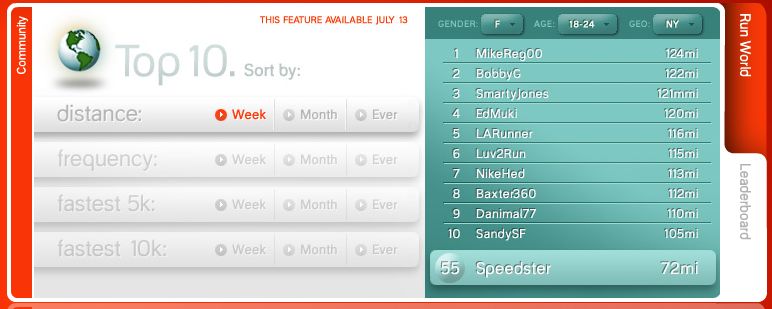
Nike has created running shoes that will wirelessly interact with an iPod mini in order to provide inspirational messages and music.

The shoe insert also appears to track distance and speed. When synced to a PC, the data is pushed to the Nike site for recording and competitive comparison.

This is perfect, I had been searching for a mechanism by which my ability to lie about how long and fast I run would be taken away from me.

Tuesday, May 23, 2006

Oh please .....


Makes me think of that Seinfeld episode where Kramer provides a movietime service

'Why not just tell me the name of the identity attack you're seeing?'

Monday, May 22, 2006

User-centric physical security?

I'm trying not to think too closely about the parallel to this by which identity data would be kept protected and close.

An unlikely place for identity thieves to look. Keep your credentials, profile, and other identity in the compartment.

Images of Papillon keep forcing their way in.

Sunday, May 21, 2006

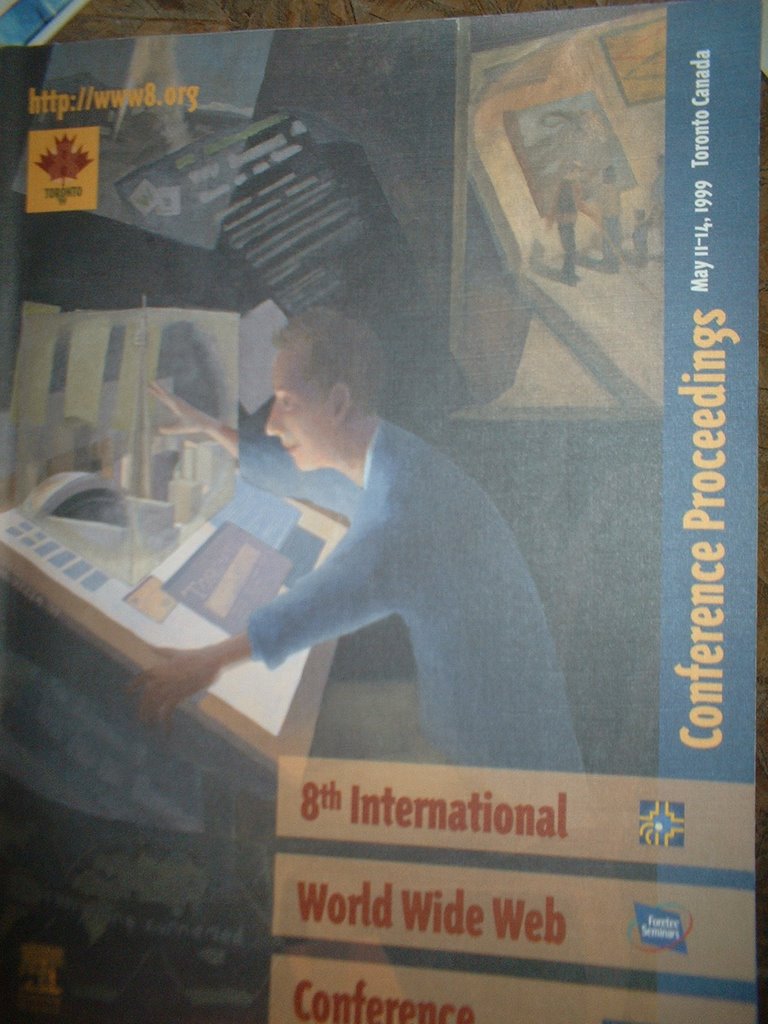
8th International WWW Conference

I attended the WWW8 Conference in Toronto in '99.

The list of topics from the proceeedings that warrant Program Committee Vice-Chairs is telling
  • User Interface
  • WWW Performance
  • Searching Querying, and Indexing
  • Browsers and Tools
  • Electronic Commerce and Security
  • Hypertext/Hpermedia
Not an identity to be seen.

In retrospect, the panel with the topic of 'Why are all these Internet companies worth so much?' should have been a warning.

Friday, May 19, 2006

Trans-Canada Highway - a Forced Analogy


Infrastructure Canada has a history of the Trans-Canada Highway that seems to parallel the current identity world.

The Trans-Canada Highway joins all ten provinces - stretching from the Pacific to the Atlantic, it's 7,821 kilometres long. When the project was begun in 1949, the fundamental question was 'Where should the road go?'
In the past the provinces had decided the route their highways would take. Unfortunately, these provincially planned routes did not usually link up with one another at provincial borders.
Not particularly interoperable
If the Trans-Canada Highway was going to stretch from one end of the country to the other, it needed to be organized to ensure that it connected at provincial boundaries. However, since highways are the responsibility of the provinces in Canada the federal government could not simply tell the provinces where to build their roads.
No overarching authority
Agreeing on a point of connection between each of the provinces was further complicated by each province’s desire to connect their major cities to the Highway. The federal government tried to get the provinces to design the “shortest practicable east-west route”, but this was sometimes impractical.
Different requirements
Ultimately the Trans-Canada Highway changed from a single roadway into a road network to accommodate the needs of the provinces and their major cities.
A compromise solution

You can drive from one side of the country to the other - but the trip will take you over a wide range of jurisdictions, road surfaces, and terrain. The 'highway' is not a single stretch of tarmac, it's the system defined by agreements between consituents, the knitting together of multiple component highways of different capabilities (4-lane freeways vs 2-lane rural routes) and the common experience of the green markers to provide a reassuring sense of consistency.

If you prick us, do we not breed?

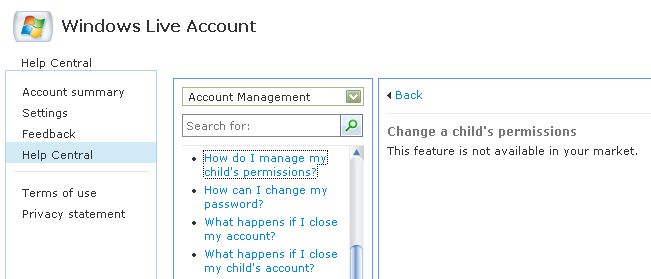
It seems Microsoft does not believe we Canadians have children.


Perhaps this is part of 'the plan', discourage non-Americans from population growth by turning off for us all software features that facilitate family-based identity management? Brilliant!

For myself, simply knowing that I'd be on my own in the raising of additional offspring makes me feel less inclined to do my "bit" for Canada.

Or maybe this is directly at Kim's instigation? Some long festering grudge against his homeland? Was he forced to go to the States for some two-tier medical procedure and carries his resentment to this day?

Thursday, May 18, 2006

YAMAI - Yet Another Misconception About Interoperability

Eric Norlin posts on Verisign's just announced PIP.

Eric emphasizes PIP's support for Yadis.
And since it works with YADIS, its not simply limited to OpenID (or LiveJournal) sites.
I don't think so (at least not for this version)

YADIS allows a Relying Party, when presented with a URI corresponding to a PIP-hosted identity, to determine which URI-based identity protocols PIP supports by obtaining a descriptor document. But, at least currently, PIP only supports OpenID so any descriptor document that PIP serves up can only indicate OpenID support. If you look at the YADIS Resource Descriptor for Verisign's PIP, you see
<?xml version="1.0" encoding="UTF-8"?>
<xrds:XRDS
xmlns:xrds="xri://$xrds"
xmlns:openid="http://openid.net/xmlns/1.0"
xmlns="xri://$xrd*($v*2.0)">
<XRD>

<Service priority="10">
<Type>http://openid.net/signon/1.1</Type>
<Type>http://openid.net/sreg/1.0</Type>
<URI>http://username.pip.verisignlabs.com/server</URI>
</Service>

<Service priority="20">
<Type>http://openid.net/signon/1.0</Type>
<Type>http://openid.net/sreg/1.0</Type>
<URI>http://username.pip.verisignlabs.com/server</URI>
</Service>

</XRD>
</xrds:XRDS>
Nothing but OpenId. So, while it may be nice for a LID (or other system)-based RP to retrieve this XML and discover this fact, it won't magically enable that RP to communicate with the OpenID-based PIP.

YADIS, like WSSOMEX enables identity suite capability discovery (ISCD? sure, why not), not identity suite interoperability.

Put another way, simply knowing that you and your spouse are incompatible will not magically make you compatible (but it could save you big bucks in marriage therapy bills).

TSODI - Episode #27 - Part 1

Aldo interviews Johannes Ernst, Dick Hardt, and John Kemp on the topic of user-centric identity in this week's episode (mp3).

At the start of each episode, Aldo reads out the names and introductions of people who have added themselves to the SODI Frapper Map in the past week. A noteworthy addition to the map is Seung-Hyun Kim, a South Korean IDM researcher. His introduction includes:

I am working at ETRI, the Electronics and Telecommunications Research Institute. Our team is named as the Digital ID Research Team, developing systems that follow standards such as Liberty, SAML, ID-WSF, and XACML. I have been certified through the first SAML 2.0 interoperability test from Liberty Alliance in 2005. We now supply the Ministry of Naitonal Defense with the system ... this will be used by over 230 cities in Korea, that means that 48 million Liberty-enabled identies will be created.
In the interview itself (and vastly oversimplifying) I saw what seems a fundamental divide when the interviewees were asked to give their definition of user-centric identity.

For Dick, user-centrism boils down to how the identity is communicated from identity provider to identity consumer - the user must be an active intermediary in the flow in order to apply their release policies (my interpretation being that back-channel SOAP messaging on the user's behalf would be ruled out as deserving the user-centric description). John takes a broader view, user control is the key aspect of user-centric and a user can still have meaningful control even when not directly involved in the identity flow.

Hopefully this distinction is explored further in Part 2.

DRM - Disc Recordings Management

Instructions for pirating a vinyl record.

This would be easily prevented by embedding 1" perpendicular 'anti-copy pegs' into the original (which would of course stop the owner from the fair use of actually playing the record but that's been my experience of DRM anyways).