Thursday, May 25, 2006

He said she said

In a comment to my previous post, Conor Cahill clarifies his meaning
That wasn't an exact quote, but pretty close. The point I was trying to make was in response to a question along the lines of "why don't we see liberty everywhere since it's been around like forever (4 years)".

My answer was along the lines of "while you don't see Liberty implemented all over the place in an ecommerce type environment you do see it in a large number of enterprise environments, especially enterprise reaching out to relying parties" (again, not a direct quote as I can't remember exactly what I said minutes ago, much less hours ago).

I also went on to explan that in my opinion the reason that you don't see it (or any other SSO solution including MS's Passport or AOL's SNS) everwhere is that SPs didn't see a significant benefit from it and were afraid to let someone else (the IdP) potentially get in the middle of their relationship with the customer.

This is changing now because of the need for strong authentication and anti-phishing/IDentity Theft. SPs are much more interested in this stuff nowadays then they were 3 or 4 years ago.
Unable to resist an opportunity to dig at Conor, our Liberty colleague from Ericsson, Carolina Canales-Valenzuela added
I usually tend to not participate in blogs, but here I cannot refrain - specially in a discussion where my good friend Paul is telling my good friend Conor that he is wrong :-).

Conor's phrase "again, not a direct quote as I can't remember exactly what I said minutes ago, much less hours ago" clearly confirms my theory that sometimes he doesn't listen to himself :-).

About the issue under discussion, I have some friends who claim that 4 years is a very short period for adoption and deployment of any new technology. This clearly applies, for instance, to the telco world, see UMTS or IMS deployment.
I believe that some of these identity management solutions have gone too far too quickly, it is like planting a seed in the desert. However, the time is coming.....

Conor Cahill - Deliciously Wrong

I like and greatly respect Intel's Conor Cahill.

That's why it is so &#*^%$@*& sweet to be able to point out whenever he makes a mistake.

Phil Windley describes an identity panel on which Conor (and other identifiable luminaries) sat.

Conor is quoted (loosely) as saying:
there’s no large eCommerce implementation of Liberty. SSO hasn’t been adopted outside the enterprise
Au contraire my Irish friend.

There are 'millions and millions' of Liberty-enabled commerce identities.

I could give Conor the benefit of the doubt and choose to believe that his comments were misinterpreted. But that's not how friendship works is it?

Will there be 3rd party Infocard designs?


I wonder if Microsoft will ignore, inhibit or encourage the creation of 3rd party graphical designs for Infocards?

A card for every hobby.

Given the importance Infocard places on the interface, and the user's presumed reliance on its integrity, is it conceivable that arbitrary images within that interface would somehow enable phishing?

Perhaps an animated GIF that simulates some piece of the Infocard GUI, i.e. a trust dialogue telling the user to ignore all other trust dialogues? Is there an attack here?

Wednesday, May 24, 2006

Cruiser-centric identity


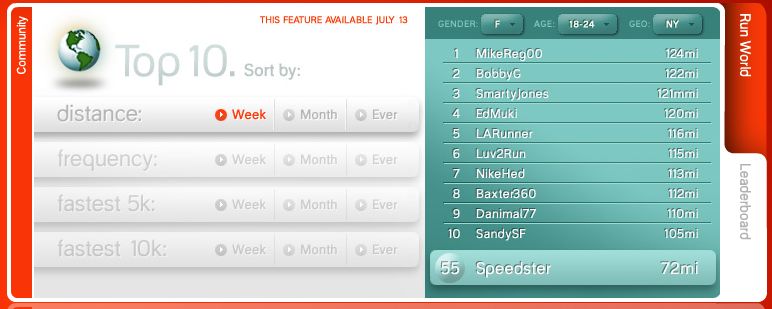
Nike has created running shoes that will wirelessly interact with an iPod mini in order to provide inspirational messages and music.

The shoe insert also appears to track distance and speed. When synced to a PC, the data is pushed to the Nike site for recording and competitive comparison.

This is perfect, I had been searching for a mechanism by which my ability to lie about how long and fast I run would be taken away from me.

Tuesday, May 23, 2006

Oh please .....


Makes me think of that Seinfeld episode where Kramer provides a movietime service

'Why not just tell me the name of the identity attack you're seeing?'

Monday, May 22, 2006

User-centric physical security?

I'm trying not to think too closely about the parallel to this by which identity data would be kept protected and close.

An unlikely place for identity thieves to look. Keep your credentials, profile, and other identity in the compartment.

Images of Papillon keep forcing their way in.

Sunday, May 21, 2006

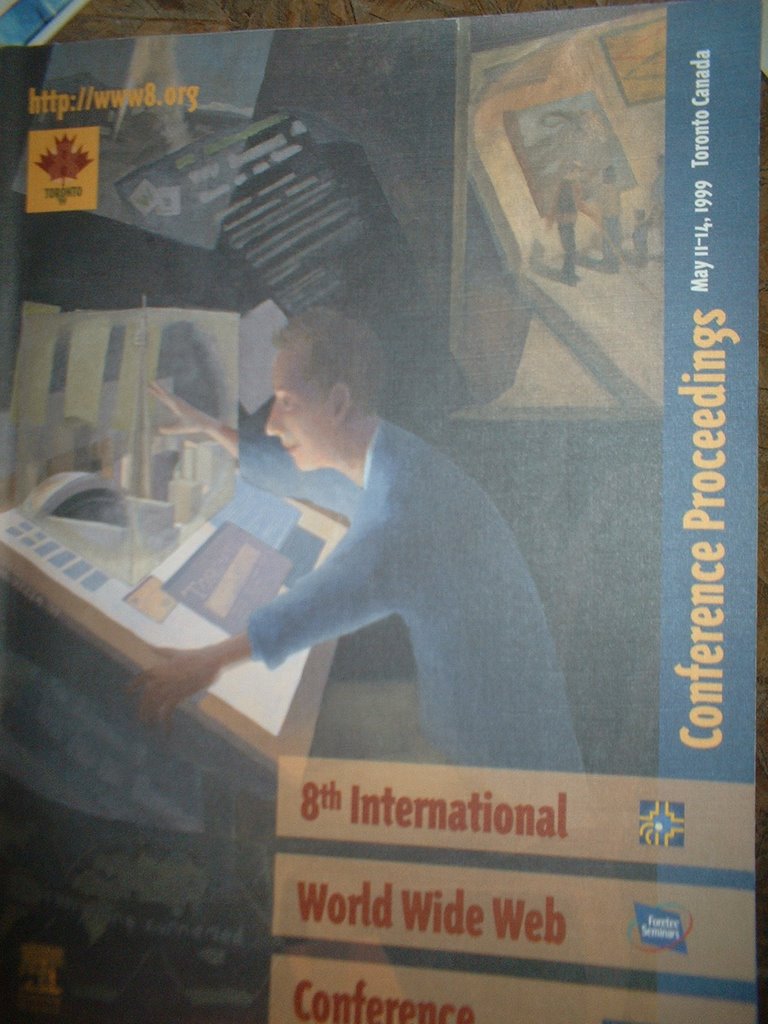
8th International WWW Conference

I attended the WWW8 Conference in Toronto in '99.

The list of topics from the proceeedings that warrant Program Committee Vice-Chairs is telling
  • User Interface
  • WWW Performance
  • Searching Querying, and Indexing
  • Browsers and Tools
  • Electronic Commerce and Security
  • Hypertext/Hpermedia
Not an identity to be seen.

In retrospect, the panel with the topic of 'Why are all these Internet companies worth so much?' should have been a warning.

Friday, May 19, 2006

Trans-Canada Highway - a Forced Analogy


Infrastructure Canada has a history of the Trans-Canada Highway that seems to parallel the current identity world.

The Trans-Canada Highway joins all ten provinces - stretching from the Pacific to the Atlantic, it's 7,821 kilometres long. When the project was begun in 1949, the fundamental question was 'Where should the road go?'
In the past the provinces had decided the route their highways would take. Unfortunately, these provincially planned routes did not usually link up with one another at provincial borders.
Not particularly interoperable
If the Trans-Canada Highway was going to stretch from one end of the country to the other, it needed to be organized to ensure that it connected at provincial boundaries. However, since highways are the responsibility of the provinces in Canada the federal government could not simply tell the provinces where to build their roads.
No overarching authority
Agreeing on a point of connection between each of the provinces was further complicated by each province’s desire to connect their major cities to the Highway. The federal government tried to get the provinces to design the “shortest practicable east-west route”, but this was sometimes impractical.
Different requirements
Ultimately the Trans-Canada Highway changed from a single roadway into a road network to accommodate the needs of the provinces and their major cities.
A compromise solution

You can drive from one side of the country to the other - but the trip will take you over a wide range of jurisdictions, road surfaces, and terrain. The 'highway' is not a single stretch of tarmac, it's the system defined by agreements between consituents, the knitting together of multiple component highways of different capabilities (4-lane freeways vs 2-lane rural routes) and the common experience of the green markers to provide a reassuring sense of consistency.

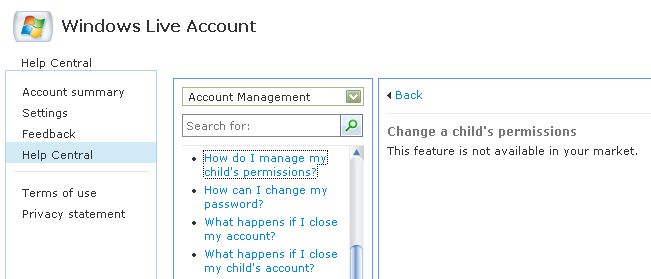
If you prick us, do we not breed?

It seems Microsoft does not believe we Canadians have children.


Perhaps this is part of 'the plan', discourage non-Americans from population growth by turning off for us all software features that facilitate family-based identity management? Brilliant!

For myself, simply knowing that I'd be on my own in the raising of additional offspring makes me feel less inclined to do my "bit" for Canada.

Or maybe this is directly at Kim's instigation? Some long festering grudge against his homeland? Was he forced to go to the States for some two-tier medical procedure and carries his resentment to this day?

Thursday, May 18, 2006

YAMAI - Yet Another Misconception About Interoperability

Eric Norlin posts on Verisign's just announced PIP.

Eric emphasizes PIP's support for Yadis.
And since it works with YADIS, its not simply limited to OpenID (or LiveJournal) sites.
I don't think so (at least not for this version)

YADIS allows a Relying Party, when presented with a URI corresponding to a PIP-hosted identity, to determine which URI-based identity protocols PIP supports by obtaining a descriptor document. But, at least currently, PIP only supports OpenID so any descriptor document that PIP serves up can only indicate OpenID support. If you look at the YADIS Resource Descriptor for Verisign's PIP, you see
<?xml version="1.0" encoding="UTF-8"?>
<xrds:XRDS
xmlns:xrds="xri://$xrds"
xmlns:openid="http://openid.net/xmlns/1.0"
xmlns="xri://$xrd*($v*2.0)">
<XRD>

<Service priority="10">
<Type>http://openid.net/signon/1.1</Type>
<Type>http://openid.net/sreg/1.0</Type>
<URI>http://username.pip.verisignlabs.com/server</URI>
</Service>

<Service priority="20">
<Type>http://openid.net/signon/1.0</Type>
<Type>http://openid.net/sreg/1.0</Type>
<URI>http://username.pip.verisignlabs.com/server</URI>
</Service>

</XRD>
</xrds:XRDS>
Nothing but OpenId. So, while it may be nice for a LID (or other system)-based RP to retrieve this XML and discover this fact, it won't magically enable that RP to communicate with the OpenID-based PIP.

YADIS, like WSSOMEX enables identity suite capability discovery (ISCD? sure, why not), not identity suite interoperability.

Put another way, simply knowing that you and your spouse are incompatible will not magically make you compatible (but it could save you big bucks in marriage therapy bills).

TSODI - Episode #27 - Part 1

Aldo interviews Johannes Ernst, Dick Hardt, and John Kemp on the topic of user-centric identity in this week's episode (mp3).

At the start of each episode, Aldo reads out the names and introductions of people who have added themselves to the SODI Frapper Map in the past week. A noteworthy addition to the map is Seung-Hyun Kim, a South Korean IDM researcher. His introduction includes:

I am working at ETRI, the Electronics and Telecommunications Research Institute. Our team is named as the Digital ID Research Team, developing systems that follow standards such as Liberty, SAML, ID-WSF, and XACML. I have been certified through the first SAML 2.0 interoperability test from Liberty Alliance in 2005. We now supply the Ministry of Naitonal Defense with the system ... this will be used by over 230 cities in Korea, that means that 48 million Liberty-enabled identies will be created.
In the interview itself (and vastly oversimplifying) I saw what seems a fundamental divide when the interviewees were asked to give their definition of user-centric identity.

For Dick, user-centrism boils down to how the identity is communicated from identity provider to identity consumer - the user must be an active intermediary in the flow in order to apply their release policies (my interpretation being that back-channel SOAP messaging on the user's behalf would be ruled out as deserving the user-centric description). John takes a broader view, user control is the key aspect of user-centric and a user can still have meaningful control even when not directly involved in the identity flow.

Hopefully this distinction is explored further in Part 2.

DRM - Disc Recordings Management

Instructions for pirating a vinyl record.

This would be easily prevented by embedding 1" perpendicular 'anti-copy pegs' into the original (which would of course stop the owner from the fair use of actually playing the record but that's been my experience of DRM anyways).

Tuesday, May 16, 2006

Fishing for dolphins

Dolphins apparently use unique whistle vocalizations to identify themselves to others. Kind of like Roger Whittaker's Durham Town.

The story has been blogged here and here. The paper that presents the research touches on a number of identity aspects to the story that I haven't seen discussed elsewhere:

  1. The whistles actually convey identity, i.e. it's not the sound of the dolphin's voice that others recognize, it's the pattern of the whistle itself.

  2. A consequence of the previous is that it would be possible for one dolphin to impersonate another by using that dolphin's unique signature whistle. It seems they do this.

  3. The identifiers are both global (e.g. a dolphin uses the same whistle to identify itself to all other dolphins) and persistent across the lifetime of the animal. Apparently, privacy is not a big concern at the moment. This will likely change as more and more get 'fished'.

I don't know art but I know what I remember ..

An interesting idea for a hardware token.

I suppose it could be phished through some PBN (paint by numbers) attack.

I definitely wouldn't want to wear it around my neck.

Beer 2.0?

Dave Kearns believes that 'Canadians are smart about identity'.

Canadians love it when Americans pay attention to us (but not to our softwood lumber or beef), so this prompted me to search on 'canadian identity complex'. The results led me to Kaliya's previous post on the subject of Canadian Cultural Identity.

The theory seems to be that Canadians pay attention to identity because of two forces - our proximity to the US is an external push threatening to squash us as a distinct culture/society, and the English/French divide is an internal tidal pull threatening to tear us apart. We are squeezed from North to South and torn apart from East to West.

It seems fitting that these forces are best summarized by a beer commercial (which seems strangely similar to another 'identity-focussed' presentation that has emerged from Canada).

Wednesday, May 10, 2006

Dignity & Power Cords

If somebody ever invents a way in which to plug in your laptop to power extension cords at a meeting/conference without the completely dignity-robbing act of crawling under tables ....

Actually, I'm about to present at the OASIS Symposium - shouldn't there be some sort of support staff to plug it in for me?

World's first demo of Liberty People Service

My colleague Yuzo Koga posts (in Japanese) about the world's first demonstration of a Liberty People Service implementation at the RSA Japan conference

My fluent skills in Nihongo allow me to provide the following translation:

Can you please tell me where is Shinjuku Station? "RSA Conference Japan 2006" Good morning, how are you? I am well thank you. "Liberty Alliance Project" Does this train go to Akhibara? "ID-WSF People Service" I'd like a beer please.

Tuesday, May 09, 2006

Identity Selector sequence

An interesting animated sequence portraying an identity selector in action. Before releasing some identity to a Service Provider, the user is given the opportunity to view the identity that will be shared, and to edit this set. Normal stuff.

What I find interesting is how the mock-up also shows how the SP can 'make its case' to the user by describing how the services being offered may be contingent on what identity pieces are shared. So, for instance, when the user decides not to share their email address with the SP, the available levels of service (each with different permissions attached) the SP is willing to provide changes accordingly. With knowledge of the consequences of withholding particular identity bits, the user is able to make an 'informed consent' decision about its release.

But I don't know of any identity protocols that explicitly support the SP providing this sort of 'offer' information when it requests identity from an IDP. Are there?

Given that the demo portrays a Shib-based system, perhaps Sibboleth added this piece to SAML? I've never heard of such an extension. More likely is that the SP has simply communicated these rules to the IDP beforehand so that the IDP effectively advertises the policy to the user. Not a particularly dynamic model.

You can't get there from here

New York Times has an article on Boeing's new 787 Dreamliner.
The 787 is designed to carry 220 to 300 people on routes from North America to Europe and Asia. Boeing is counting on it to replace the workhorse 767, which is being phased out, and, it hopes, a few Airbus models as well. Its advantages go beyond fuel efficiency: Boeing designed the 787 to fly long distances while keeping passengers relatively comfortable.

That approach grows out of another gamble by Boeing — that the future of the airline business will be in point-to-point nonstop flights with medium-size planes rather than the current hub-and-spoke model favored by Airbus, which is developing the 550-seat A380 superjumbo as its premier long-haul jetliner. Flying point to point eliminates the need for most passengers to change planes, a competitive advantage so long as the Dreamliner is as comfortable and as fast as a bigger aircraft.
The SAML/Liberty architecture is often equated with a hub and spoke identity model - the user gets to their SPs through their IDP, the IDP is presented as some undesired interloper (think Chicago O'Hare) sitting in the middle of the actually desired interaction (getting from the East coast to the West).

Why is there an IDP in the mix? Shouldn't a user be able to simply take off from any dinky airport and land anywhere else - no need for a 'hub' in the middle.

Sounds great. But, maybe airports would be concerned about the aircraft safety processes of the various other airports that they would be expected to accept flights from. Would you want planes of unknown structural integrity landing on your nice new runways? Who is to say that their landing gear will work, or that they won't spray oil on your tower. As an Air Traffic Controller, would you accept some rickety Cessna coming in on a wing and a prayer (literally)? Maybe you would, but I bet you'd route them out to Runway 04/22R out on the edge of the field.

That said, if I never fly through O'Hare's Terminal 2 again, that will be just fine.

Monday, May 08, 2006

Lounging around

Travelling through Toronto to San Francisco, I expected to have to log-in to my DataValet account in order to access the free Wifi in the Maple Leaf Lounge at YYZ. I've long relied to Firefox's ability to store details for accounts such as this cause there is no way I'd remember otherwise.

Instead, this time, I was given the option of using either a cell phone number or my Aeroplan number as account and no password.

Next time I'll read the agreement to see what I've agreed to allow them to do with my number.

Saturday, May 06, 2006

Identity Disclaimer

Given that there is a proposed new disclaimer for the internet itself, perhaps we need something comparable for identity.

Your identity is precious, share it on the Web at your own risk. Many sites will ask you for it, you almost certainly should decline. If you do decide to share, do not place any great hope that you can control the uses of your identity information once you click the 'Send' button - it's gone. Repeat after me - 'gone'. If you provide your email address, you should proactively add the site to your email filters 'spam list' because, regardless of what you told them, they will probably send you 'newsletters'. You should never give your real identity, instead make up the details of your life - it works for you in the bars, why change? If you provide your shipping address, expect that it will be sold and you will subsequently receive junk mail alerting you to 'incredible time-share opportunities' (do not buy into the Poconos - it's a bubble and your investment will be lost). When asked to provide a password, chose something easily memorable - hackers will appreciate the courtesy and possibly do less damage. And you know those people that say that the risk of giving your credit card to a restaurant waiter is greater than sharing the number online - well those people probably bought into the Poconos Bubble. The Web is no place for your identity, keep it in your wallet.

Thursday, May 04, 2006

Identity and Reputation and Opinion

Johannes likes Phil Windley's distinction between identity and reputation:

Identity is my story about me.

Reputation is your story about me.


I think this is a bit of an over simplification in that it doesn't capture the collective aspect of reputation. I'd say that a single user's 'story about me' is opinion rather than reputation. It only becomes reputation when combined with the opinions of others.

So, my mod would be:

Identity is my story about me.

Opinion is your story about me.

Reputation is the aggregation of the opinion of a number of others.

Visual Cues for Wikis

Phil Windley discusses the possibility of using visual metaphors on Wiki pages as cues to the readers.

A simple thing you could do is to “age” pages so that page color changes the older and staler a page is. Using a visual metaphor gives information without making an explicit reputation claim.
At the Liberty Alliance meeting last week in DC, we joked about something similar for Wikipedia - a scale against which the left/right bias of particular pages could be set. Something comparable to Homeland Security.

Wednesday, May 03, 2006

How did they hit on 92?


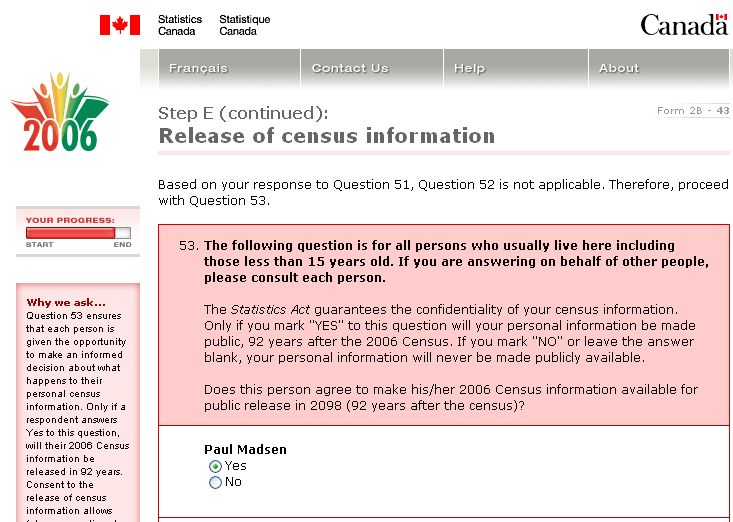
I just completed the 2006 Canadian Census online.

As befitting a country with two official languages, there were the expected many pages of questions covering what fraction of the time I spoke English/French at home, at work, in public transit, in private transit, on the toilet etc.

At the end of the survey, each member of my household was given the opportunity to opt-in for the public release of our data at some point in the future - specifically 92 years from now.

I gave my consent just so I won't have to deal with them pestering me when I'm 134.

I think we need a Canada specific Identity Rights Agreement policy & identifier.

SXIP 2.0, We Hardly Knew Ya

Eve Maler reports from IIW that:
The new news here was that SXIP is moving its DIX standardization effort into a form that is built on top of SAML — he called it a “user-centric profile of SAML”. This is great news, and I’m eager to see how this is shaping up; John Merrells is doing a session today on that.
It definitely is good news. Begs the question, if DIX was to be SXIP 2.0 standardized, but is now to be a profile of SAML 2.0, where does that leave SXIP 2.0?

But will they be able to swap songs?

Trapped Australian Miners get iPods

I wonder if some wit preloaded this Johnny Cash classic.

Unexpected Search Results

When searching on "Liberty extensions" I was not expecting this.

I resent the 'stunt' characterization - they should try writing specs balanced on each others shoulders!

Monday, May 01, 2006

Location-based poetry

James Kobielus has written a peom entitled Geo. When I saw the title I confess I thought it would be about geolocation - maybe the privacy aspects. It isn't.

But it did get me thinking that maybe there is a business plan for geolocation-based poetry delivery. If I'm walking downtown, some futuristic haiku gets delivered to my cell, if strolling through a forest, a peacful sonnet. Or, if inactivity can be inferred, an iambic warning against sloth. Endless possibilities.

The advertisers would abuse it of course.

Wednesday, April 26, 2006

WS-Fishy in Denmark


Tag Lady points to a interesting decision from the Danish Government.

Makes me proud of my Danish heritage.

Friday, April 21, 2006

PKI - the four letter acronym

Entrust, after the last few years spent trying to deny their PKI heritage, seem to be now embracing it - even to the extent of hiliting it on their home page.

Thursday, April 20, 2006

Calendar Confusion & Shared Credentials

I was playing around on the new Google Calendar and searched on 'identity' in the available public calendars. I hit on a calendar owned by an identity colleague. Interspersed amongst industry events were a few that appeared out of place, e.g. 'Girls Night Out' and 'Take kids to school'.

My own personal calendar has lots of the latter type events (but distressingly few of the former) so I can definitely sympathise with the confusion by which these private events snuck into the public calendar.

It also points out an interesting issue, the private events that snuck in actually belonged (in the sense of who was going to be attending) to my colleague's wife. Google allows you to create separate categories for events (labelled as different calendars under the same Google account) and treat them differently with respect to sharing - which is what my colleague (call him Husband) did.

Also possible would have been for the lady of the house (call her Wife) to have created her own calendar under her own account, make it public and exportable, to be then imported into that of Husband. Likewise for the reverse direction - each would see their own events as well as those of their partner.

Another possibility would be for one or the other to define a 'Family Calendar' of shared events (e.g. dinner parties, vacations, etc) - this to be imported into both the personal calendars of Husband and Wife. When Husband viewed his calendar, he would see his own events as well as the shared family events - likewise for Wife. Importantly, neither would need see the details of the personal events of the other (except perhaps availibility for scheduling purposes).

This concept of shared resources (the family calendar) is important to operators and ISPs because there are situations in which an authentication, while insufficient to enable access to private resources, may be sufficient to enable access to such a shared resource. This sort of authentication is generally passive - consisting of the user opening some communication channel - and so of interest to those who provide such communication channels.

Consider Husband accessing the internet through the home PC he shares with Wife. The implicit authentication performed when he accesses the Web from the static IP associated with his ISP account can be sufficient for the ISP to identify him as one of the set of users associated with that account, and who therefore can view the shared calendar. But, because the "credential" by which Husband authenticated to the ISP (possession of that IP address) is shared with Wife - the ISP would be unable to determine which of the two was actually authenticating. But that's OK, because the access rules for the Family calendar would stipulate that anybody coming from that IP address would be allowed to view (and likely change) the Family Calendar.

If however, Husband then wished to view his own private calendar, the ISP would need to authenticate him as an individual in order to disambiguate him from Wife. At this point, he would then present a password etc unique to his account - the shared credential no longer sufficient for the task at hand.

When the resources being accessed are remote from the entity authenticating the user (e.g. if Google was hosting the various calendars but Husband and Wife were being authenticated by their ISP) then the Service Provider (Google) needs a way to stipulate to the Identity Provider (ISP) its requirements of an authentication (e.g. I need something that pinpoints the user as an individual).

Fortunately, SAML 2.0 provides a framework that allows Service and Identity Providers to discuss just such details about how the user authenticates (and much more) - its called Authentication Context. Work is currently under way in the SSTC to explore whether the existing Authentication Context mechanisms in SAML 2.0 need be extended to support this concept of Shared Credentials.

Ingenious eh?


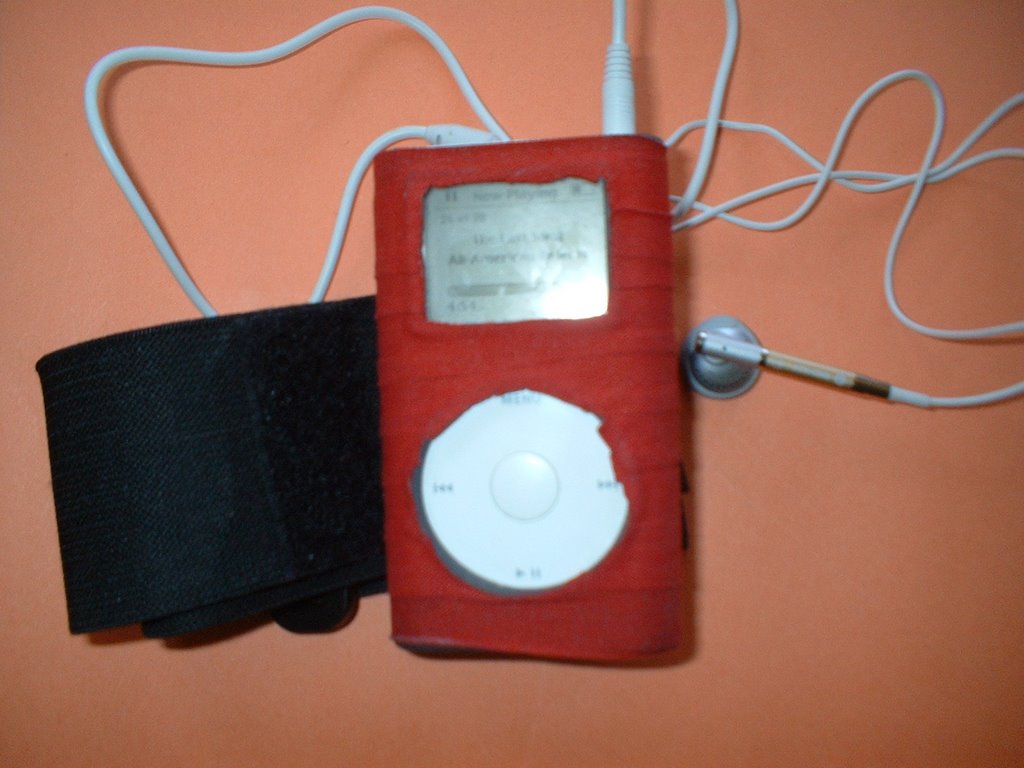
The rubber of my iPod Mini holder split at the back where the armband went through.

To keep it together I wrapped it round with good ol' Canadian Tire hockey tape (red no less).

Duct tape just seemed so 90s.

Wednesday, April 19, 2006

You show me yours ....

I can think of a number of situations where I might be willng to release some slice of my identity only if the individual making the request (or on whose behalf the request was being made) was willing to share that same information (or perhaps even some other aspect of their identity) with me.

For example
  • geolocation - if you want to know where I am, before I decide to approve the request I want to know where you currently are. Maybe I won't share mine if you are within a certain minimum distance.
  • home address - similar to above but perhaps I'll only release my address if you live in the same city
  • marital status - 'nuff said
This quid pro quo is a normal part of offline interactions, the sometimes not-so-subtle negotiation that we engage in before giving up some otherwise private piece of info. Sometimes merely the act of sharing is sufficient, other times the actual value of the data matters (e.g. 'what is your salary?')

To duplicate this in the digital world would require a number of pieces (not necessarily all):
  1. the ability to express this preference as an access control policy.
  2. the ability for this preference to be advertised to potential requestors, or the ability for non-compliant requests to be failed with appropriate fault information.
  3. the ability for a request for some piece of identity to include any of
    1. the same piece of identity for the requestor.
    2. the location of the same piece of data for the requestor.
    3. how to discover the same piece of data for the requestor.

Identity Middlespace?

Ross Mayfield writes of the middlespace - a hypothesized region where bottom-up phenomena meet top-down in a synergistic collision.

One quote caught my eye:
...when rules are kept simple and incentives are provided from the Top-down, the energies of the Bottom can be realized for mutual gain. However, negotiating the sharing of control is both ripe with risk and opportunity.
In today's identity, SAML, Liberty, and Infocard are typically presented as top-down initiatives; LID, OpenID, YADIS as bottom-up.

Notwithstanding that this distinction is, in some aspects, either completely wrong (Liberty can support user-hosted identity for instance) or a gross oversimplification (top-down identity provides more than governance and incentives, and bottom-up provides more than merely enthusiasm); the identity metasystem at least promises to be where top-down and bottom-up identity meet. The "identity middlespace".

One challenge (with associated risk) will be in dealing with the impedance mismatch presented by the different security & privacy characteristics of the various systems. Different use cases (blog commenting vs 401K access) result in (appropriately) different sets of requirements, which subsequently manifest themselves in varying security & privacy characteristics. Step-down might be easy, step-up though?

Risk and opportunity - rife indeed.

Tuesday, April 18, 2006

Alice doesn't live here anymore


In developing the Liberty People Service, we often relied on a particular use case (a principal named Bob trying to determine the coordinates of his friend Alice) to help us clarify requirements.

Having one user ask (or more likely a provider asking on behalf of that user) for a resource 'owned' by another, and maintaining the privacy of each through pairwise pseudonyms, presented us with a variety of challenges, both conceptual and technical.

Over time, Bob and Alice (and sometimes the mysterious 'Tony', was he Alice's friend or what? He just kind of showed up) almost became honourary members of the Technology Expert Group.

But, overtime, familiarity bred contempt.

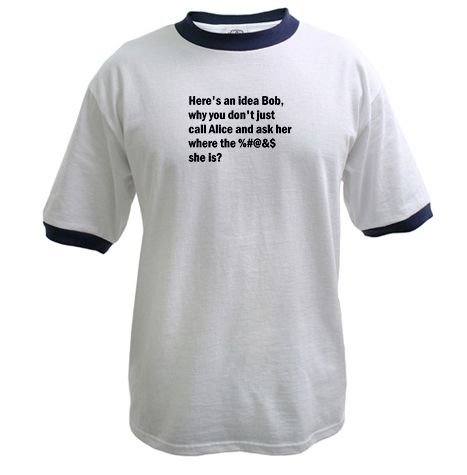
Bob, I am sick and tired of your incessant whining and repeated 'Where are you Alice?'. Take the hint buddy. If she liked you don't you think she'd actually be close enough that you wouldn't have to ask? And Alice, how about being honest for once in your life and just tell Bob how you feel? Women like you make me sick with how you lead guys on!

Jigsaw 's Missing Pieces

Jigsaw presents itself as
an online business contact marketplace where marketers, recruiters, and sales people can buy, sell and trade business contact information
Members buy their way in, either through a monthly subscription fee or by providing a certain number of their contacts to the system. Yes, the currency is the contact info of your friends and colleagues.

So, if you hand me your business card, I can effectively sell that information to Jigsaw. My gain, your (through the potential for cold calls from salespeople) loss.

You almost certainly weren't thinking of my abusing the privilege in this way when you gave me your business card. But, beyond scribbling across the front a non-enforceable 'Not for Resale', there is not much you can do to stop me.

If however, you had initially provided me your contact info digitally, then you could at least be given mechanisms/syntax in order to express any restrictions you might wish to impose on me. Such restrictions could include limiting sharing, constraints on contact (e.g. don't use IM before noon), or limits on how long the info could be stored).

Such preferences would still almost certainly remain unenforceable but I could no longer claim innocence or ignorance. Importantly, neither could Jigsaw if the preferences stayed with the contact info if and when submitted there.

Identity Rights Agreements would make this possible.

Liberty adoption

Liberty's latest newsletter indicates that adoption is soaring.

We're like a MySpace with far fewer predators.

In a previous life ...

I played alot of Ultimate in the Ottawa-Carleton Ultimate Association league (which used to be the largest in the world, perhaps still is), the monthly newsletter and web site for which I used to write a piece parodying Jack Handey's Deep Thoughts.

I've started a new blog at Cheap Thoughts to begin a list of the collection.

I feel your pain

Like myself, John Kemp is close to 40 (but the other side of it) and feeling the "slings and arrows of outrageous fortune" associated with this age and corresponding life milestones.

But he still enjoys getting out for a run, as I do. Maybe a slower pace, probably a stop mid-way through, almost certainly not as long, but at least I'm not wearing velcro walking shoes.

Who'd have thunk ....

... that a search on user-centric would return a reference to Microsoft Hailstorm.

Also, from a 2001 speech (in which there are a sickenly polite 26 'thank you's!) by Bill Gates:
So today is a milestone for us. It’s the public rollout of these user-centric XML Web services. It is a new model for user-centric computing. This is not the world of cookies and things that are very opaque to users. This is a world of a very explicit schema that you choose how you want to control the different parts of that schema in terms of how you fill in the information and where it is made available.

In addition to control, it seems that Microsoft (or maybe just Bill) saw the transparency of the system to its users as key to its user-centric nature. This wasn't some invisible cookie, but mechanisms that directly and explicitly involved the user in identity transactions. Hints of Infocard.

This principle appears to have evolved into Kim Cameron's "Laws" of 'human integration' and 'consistent experience'.

Friday, April 14, 2006

Social Mobs

This summary is not available. Please click here to view the post.

Frapper Map for Identity Podcast

Aldo has created a Frapper Group Map for listeners of his 'The Story of Digital identity" podcast.

I'm proud to be the first Canadian.

Numly & MicroID?

MicroID is a recent proposal by which publishers can lay claim to their content by embedding a microformat within that content.

Numly does something similar. I used Numly's Firefox extension to create the following ESN for this blog.

esn 70509-060414-622231-41

© 2006 All Rights Reserved.


The Numly blog has a post on how they might use microformats.

By my count, there is an extra line in the above bar code.

Thursday, April 13, 2006

I'd rather have the arm room

AirTroductions - four thoughts:
  1. Incredibly hokey and awkward name. AwkwardSilences.com would be more appropriate.
  2. Until they hook into the airlines booking systems or Expedia etc, I'm going to have to enter my flights by hand?
  3. HotelBuddies.com must be next. Think of the economies.
  4. Everything I do, from chosing my seat, to glaring at my seatmates at first sight, to pretending to be asleep or listening to music, is designed to ensure I don't have to talk to people on a flight.
I wonder if it's possible to specifically ask to be seated as far as away as possible from such kindred spirits.

OpenLaszlo fo Common Identity UI?

OpenLaszlo is pretty cool, you can build some powerful apps with it.

To explore its relevance for defining some sort of standardized UI for identity interactions, I mocked up just such an interface (flash).

In principle, both UI components and sequencing could be standardized.

FWIW, the code for the above mock-up is:
  
<canvas>
<view y ="30" >
<simplelayout axis="x" spacing="5"/>
<view id="cart" bgcolor="#666699"
height="250" width="125">
<text fgcolor="#FFFFFF"
x="5" y="5" >Available Identities</text>
</view>
<view id="wish" bgcolor="#666699"
height="100" width="125">
<text fgcolor="#FFFFFF"
x="5" y="5" >Chosen Identity</text>
</view>
</view>

<view x="${cart.x+10}" y="${cart.y+55}"
resource="blast.jpg"
onmousedown="dragging.apply()"
onmouseup="dragging.remove();">

<dragstate name="dragging"/>

<method name="stop">
if (this.x>wish.x) {
this.animate("x", wish.x+10, 300);
this.animate("y", wish.y+55, 300);
} else {
this.animate("x", cart.x+10, 300);
this.animate("y", cart.y+55, 300);
}
</method>
</view>

<view x="${cart.x+10}" y="${cart.y+125}"
resource="choo.jpg"
onmousedown="dragging.apply()"
onmouseup="dragging.remove();">

<dragstate name="dragging"/>

<method name="stop">
if (this.x>wish.x) {
this.animate("x", wish.x+10, 300);
this.animate("y", wish.y+55, 300);
} else {
this.animate("x", cart.x+10, 300);
this.animate("y", cart.y+55, 300);
}
</method>
</view>

<view x="${cart.x+10}" y="${cart.y+195}"
resource="astro.jpg"
onmousedown="dragging.apply()"
onmouseup="dragging.remove();">

<dragstate name="dragging"/>

<method name="stop">
if (this.x>wish.x) {
this.animate("x", wish.x+10, 300);
this.animate("y", wish.y+55, 300);
} else {
this.animate("x", cart.x+10, 300);
this.animate("y", cart.y+55, 300);
}
</method>
</view>

<text x="5" y="5">
Drag chosen identity to
</text>


<button x="160" y="150">Select</button>
</canvas>

Do you really need an account?

As part of his "The Story of Digital Identity" podcast series, Aldo Castanada interviewed Ben Adida, a Phd candidate in crypto at MIT.

Ben made one comment in the interview that caught my attention.
.... everything you do is tied to some kind of identity, at least a pseudonym, because otherwise it's not that useful. I mean, if you go back to Amazon, and Amazon doesn't keep track of anything you do, then it's not a very useful web site ...

Ben seems to be suggesting that Amazon (and other such sites) must necessarily have some sort of persistent pseudonym for users in order to provide them any sort of useful and customized experience.

This ignores the very real potential for anonymous interactions with service providers, where a user's attributes can be asserted by some identity provider as needed, but no persistent account need be maintained at that service provider. Everytime they reappear at the service provider, they see the user fresh (excepting any cookies they might have set on the browser).

Bottom line, service providers will need to know something about you in order to provide differentiated service. Such information could include shipping address, calendar info, reputation etc. Today's reality is that service providers force users to create a credentialed account in order to allow them to track and cumulatively collect such information across multiple visits. But it needn't be this way if the information was supplied as necessary by some other identity provider.

Wednesday, April 12, 2006

User-centric lasik

For $99.95, I hope they provide drops as well.

I can't help but trust the site, I mean they have an MD.

A Long Tale of Two Cities

There is a cost associated with staying connected to friends or colleagues should circumstances change (e.g. change of address or job). Twenty years ago, if a friend moved to a different city, the options for maintaining that connection were letters and phone calls. Even with the emergence of communication technologies like email, IM, VoIP etc sharply cutting communication charges, the ongoing cost of tracking identifiers and addresses remained. When costs are high, limited time and energy will ensure that not all connections can be maintained - they get lost in the tail.

Applications that facilitate the maintenance of such connections by lowering the associated cost (e.g. in time, effort, duplication across various applications, etc) could be useful. A connection that might otherwise get lost in the long tail of the social distribution could keep its head above the water.

I have been thinking that something like Liberty's People Service could play a role here, imagining that somebody could build an application on top to help people stay in touch with those from which they would otherwise drift apart. Call it 'Virtual Mom' maybe. Seemed a bit far-fetched.

Then I came across this paper describing a 'Keep in Touch' Phone - a phone that reminds/persuades users to do just that, keep in touch with their contacts.

Public Displays of Connection

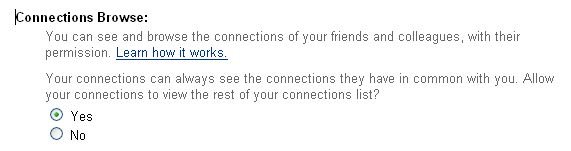
An interesting MIT paper on displays of social connections, i.e. the willingness and/or ability of people to advertise their social network for others to browse. For instance, in LinkedIn, a user can stipulate whether or not their list of connections is visible to others.


In developing our People Service, Liberty proceeded on the assumption that a user's social network (as manifested in the membership of their People Service) was an identity resource like any other (e.g. profile, geolocation, calendar etc) and so the user would be able to control under which circumstances, and to whom, it was shared with.

In describing existing social network sites like LinkedIn, Friendster, Orkut, etc, the authors write:

Most networking sites share a similar model of interpersonal links — they are mutual, public, unnuanced, and
decontextualised:

  • links are mutual: if A shows B as a connection, then B has
    also agreed to show A as a connection,
  • the links are public: they are permanently on display for
    others to see — here, the sites do differ, e.g. LinkedIn
    allows you to see only the connections made by your
    immediate links, and only if they allow it, whereas Orkut
    allows users to explore freely, and others limit network
    viewings to a still more broad class of friends of friends of
    friends,
  • the links are unnuanced: there is no distinction made
    between a close relative and a near stranger one chatted
    with idly on-line one night,
  • the links are decontextualised: there is no way of showing
    only a portion of one’s network to some people — some
    sites do allow users to adjust the closeness by degree of
    the people who are to be allowed to see their
    connections, and within that degree everyone can see all
    connections (there is no ability to segregate one’s links),
    and similarly for one’s profile, and a few sites allow
    limiting parts of the profile to closer connections, but
    again connection degree is the only distinction made.


We considered each of these aspects in developing the People Service.

mutual - while we allow for symmetric connections between users, we don't require them. Just because Bob is in Mary's list doesn't necessarily imply that Mary is in Bob's. However, it's worth noting that, for some use cases, the lack of a mutual connection can have a significant impact on the effectiveness. For instance, if Bob adds Mary to his connections in the context of enabling her to view his geolocation - without Bob also being added to Mary's list , Mary's applications will be unable to take advantage of this privilege and query Bob's geolocation on behalf of Mary. They wouldn't know where to start (unless Mary tell's them 'Oh, Bob said I could see his geolocation and this is the address').

public - ultimately, depends on the policy of the user (and of the provider's ability to enforce said policy). Most use cases we considered have the list of connections being queried by some provider on behalf of the same user (e.g. some provider querying Bob's list of connections on behalf of Bob, rather than some other user) and so the access control decision boils down to 'Which providers can ask on my behalf'. Another class of use cases would require that access be defined in terms of the identity on whose behalf the request was being invoked. For such use cases, a user might define access control for their list of connections as 'Allow anybody on my list to see the list, forbid any others'.

unnuanced & decontextualized - a user can categorize their connections through groups and/or metadata tags. Based on such categories, the connections can be differentiated (e.g. allow anybody to see my 'Work Colleagues' but keep hidden the 'Family' group).

What we haven't thought about to this point is the ability of a particular member of somebody's People Service list to specify their policy over display (e.g. allow Mary to specify that, while she consents to being added to Bob's list of connections, she does not wish this fact to be advertised'. This would introduce the question of who 'owns' this information.

London forecast - hot, fair & dry

di·ver·gence Pronunciation (d-vûrjns, d-)
n.
1.
a. The act of diverging.
b. The state of being divergent.
c. The degree by which things diverge.

2. Physiology A turning of both eyes outward from a common point or of one eye when the other is fixed.
3. Departure from a norm; deviation.
4. Difference, as of opinion. See Synonyms at deviation, difference.
5. Biology The evolutionary tendency or process by which animals or plants that are descended from a common ancestor evolve into different forms when living under different conditions.
6. Mathematics The property or manner of diverging; failure to approach a limit.
7. A meteorological condition characterized by the uniform expansion in volume of a mass of air over a region, usually accompanied by fair dry weather.

Tuesday, April 11, 2006

A Social Paradox

If my social network and that of somebody else have significant overlap (e.g. shared membership), then the odds are good that the two of us know each other and even that we know each other well. And if we share the same friends and colleagues, then we are likely to run in the same social circles - and so are likely to be in each other's social network as well. In a sense, the connection between myself and such a contact is strong, reinforced as it is by the multiple links between ourselves - both the direct one and the others that go through our shared contacts.

But, there would seem to be a paradox here.

For some applications, to accrue benefit from a social network (e.g. get that job recommendation, date, stock tip, etc), there is value in maximizing its radius (or equivalently, minimizing the average distance between myself and others). But strong connections don't contribute much here. There is little value (in the sense of expanding my network) in these tight social links. If I dropped such a contact from my network (let's rhetorically say he broke one of my dining room chairs at a New Year's Eve Party) - my network health & viability would likely not be significantly impacted - the other links we would continue to share would provide a buffer to absorb any significant shrinkage in the radius of my network (and to ensure that we will share ongoing awkward silences at summer BBQs).

Or equivalently, if I add a new contact to my online network, and they bring with them no fresh blood - individuals not already in my network - then I gain nothing (in the sense of maximizing radius) from the addition. I might as well just keep them in my Thunderbird Contacts.

More important to maximizing the size of my network are weak connections, i.e. those to individuals typified by the fact that we have few if any shared members in our respective networks. Such connections are weak in the sense that it is only through the direct link that we stay bound, there are no suppporting secondary links reinforcing them. But it is these weak connections that ultimately allow a network to expand beyond its incestuous (not literally) core of strong connections. Adding (or removing) such a connection can have significant impact on network size.

For me, this is a clear argument that I need to get out and meet new people. My wife remains unconvinced.

Reputation & Social Distance

I think of reputation as 'aggregate opinion'. Someone's individual opinion of me, while potentially feeding into my reputation (if they tell others), is not reputation itself. That's why, for me, some IDP asserting to some attribute of mine is not attesting to my reputation, unless that IDP was a Reputation Provider (ala Opinity) specifically doing so.

But, opinion aggregated from which community? Or, in other words, what set of other users are asked the question 'What do you think of Paul?'.

In eBay's feedback system or Slashdot's Karma, the community is comprised of all other users with whom I've interacted (within the respective systems). For those other eBay users scoring me, and for those relying on such scores, I am my eBay pseudonym. Neither group knows me beyond that identifier, nor do they need to, because the whole scope of the system (interactions, subsequent scoring, and querying of reputation) is confined to the online world, specifically eBay's corner of it. The only point at which the online and physical world intersect is at the point of shipping whatever product was bought and sold.

Another potential community of users from which my reputation could be built are those that do indeed know the real physical me - my offline friends, family, and colleagues. Such a group will almost certainly have insights about me unavailable to soem eBay user who knows me based only on our online commercial transactions.

So, my social network, generally comprised, at least in the first degree, of individuals who know the real me, and not some online pseudonym by which I present myself, could be a basis for reputation. I think it would be interesting to explore when this sort of offline/online bridging reputation would be more applicable than pure offline.

As one example, when someone is considering hiring me, they won't be thinking to themself 'I wonder what his eBay Feedback score is'.

Monday, April 10, 2006

Would this qualify as a "Purring Test"?

An alternative to captchas.

Identity Gospel

In Adam Nicolson's "God's Secretaries - The Making of the King James Bible" Nicolson portrays the decision by King James I to sponsor a new translation of the Bible as part of his hope to heal the schism within the English Church between conservative Bishops and reforming Puritans. Nicolson suggests that, more than anything else, James Stuart wanted his new reign to be undisturbed by the sort of religious strife that characterized his Scottish upbringing (as evidence his motto 'Blessed are the Peacemakers").

The hope was that a new "authorized version" of the Bible would serve as a middle-ground between the Protestant Geneva Bible (1560) and the established Church of England Bishop's Bible (1568), and thereby settle the many biblical controversies that divided the two camps.

James drafted a set of instructions to the committee of Translators tasked with creating the new version. To one instruction in particular Nicolson assigns particular importance:

No marginal notes at all to be affixed, but only for the explanation of the Hebrew or Greek words, which cannot, without some circumlocution, so briefly and fitly be expressed in the text.

Marginal annotations had been extensively used in the Geneva Bible in order to allow its translators to offer their interpretation and clarification of particular points in the main text (i.e. they profiled the main text). Problem was, King James found most of these clarifications, Calvinistic and Puritan in nature as they were, offensive. Consequently, he instructed that the marginal notes mechanism should be used only sparingly in the new Bible.


Nicolson interprets this instruction to mean that James deliberately sought to ensure that the main text of the new Bible could be, where appropriate, intentionally vague (i.e. underspecified) and unclarified by any marginal notes. For James, such ambiguity in the text would mean that both sides of the dispute, established Church of England Bishops and the reforming Puritans, could find an acceptable interpretation within the new Bible.Where clear direct text had been the goal of the Geneva Bible, the King James Bible would be known for its rich, grand and (importantly) subtle phrasings. Where the Geneva Bible had left no room for any interpretation other than that of its translators and subsequent annotators, the new Bible would provide a rich "platform" on which the different Christian faith systems could build. Bishops and Puritans, while disagreeing on specific interpretations, could agree on the fundamentals as expressed through the text. A meta-bible if you will.

We already have our identity Seven Commandments and evangelists abound. Maybe it's time to consider the Gideon's marketing model in spreading the gospel. I know I spend too much time in hotel rooms.

Sunday, April 09, 2006

s/obscenity/user centric/

United States Associate Supreme Court Justice Potter Stewart could have been referring to many things other than pornography when he wrote in an opinion:

I shall not today attempt further to define [obscenity]; and perhaps I could never succeed in intelligibly doing so. But I know it when I see it ...

Hopefully we can do better than this for user-centric identity.

Y.M.C.A (without the overt sexuality)

Johannes calls for contributions to the YADIS song.

Note: for optimum enjoyment, this should be sung while wearing motorcycle leathers. Your call of course.


Ya-URL*, there's no need to feel down.
I said, ya-URL, cause your future is sound.
I said, ya-URL, your metadata can now be found
Your issues need not go un-resolv-ed.

Ya-URL, there's a place you can rest.
I said, ya-URL, for your capabilities we can test.
They can start there, and providers can find
Others of a sim-ilar-URI-kind.

It's fun to rest with y-a-d-i-s.

(Repeat till nauseus)


* - the 'earl' pronunciation, not the spelled-out acronym. This will be key for 'getting it'.

Saturday, April 08, 2006

User-centric targetting


John Kemp postulates that user-centric identity is here already - and it's not what we were hoping for.

Many of today's systems put the user right smack at the center - of a big juicy identity theft target.

FSN - &$%#& Social Networks

Marc Canter argues that Social Networks must open up and allow their end-user data (their networks) to be accessed and moved.

He offers FOAF and the microformat XFN as options. Liberty's People Service is another.

Marc also creates a new acronym to stand beside 'YASN'.

Friday, April 07, 2006

Pidgin or Creole - Linguistic Interoperability

A pidgin is a reduced language created when two or more groups with distinct languages are forced into contact - the pidgin emerges in order to provide some level of cross-group communication. Each group retains its own language for "internal" communications but uses the pidgin for "external" communication. One example is a pidgin known as Russonorsk that emerged between Norwegian and Russian fishermen who encountered each other in the Arctic waters they trawled.

Pidgins often arise as a second language for colonists and workers who speak differeing native languages and yet need to talk to each other. For various reasons, the groups are unwilling or unable to learn the language of the other and so fall back on a pidgin as an alternative. For instance, when the English set up a trading post in Canton in the 17th century, both groups had such a high opinion of their own culture and language, and a low opinion of those of the other, that neither community would contemplate learning and using the other language.

Compared to normal languages, pidgins are severely limited in the complexity of communication they can provide. The sounds of a pidgin are generally just those common to the languages that go into it. A pidgin's words generally just consist of nouns, verbs, and adjectives, with little or none of the other components of a full grammar, e.g. adverbs and prepositions.

Pidgins can evolve into more full-featured languages. A creole is the result when a generation of pidgin-speakers begin to adapt that pidgin as their native language rather than a secondary option. Compared to pidgins, creoles have larger vocabularies and much more complex grammars. Consequently, creoles are far more able to support the expression of complex concepts and phrases expected of a real language - those which pidgins can't handle. Creoles often emerge amongst the children of pidgin speakers - it's as if the children naturally recognize the limitations of their parent's pidgin and fill the gaps in order to enable more meaningful communication amongst themselves.

Both Yadis and Web Single Sign On Metadata Exchange Protocol allow a provider to query the identity suites supported by some other, Yadis for URI-based systems like OpenId and LID, WSSOMEX between WS-Federation and Liberty ID-FF 1.2 enabled sites. In the absence of a single URI-based protocol, or in the absence of a single XML-based protocol, both Yadis and WSSOMEX enable a sort of interoperability by answering the question 'What does the other guy speak?'.

Both feel like pidgins in their limited scope and expressiveness, rather than a full-featured creole shared between the two worlds. It's like the previously mentioned fishermen using a pidgin (part of neither language) in order to determine which full language (either Russian or Norwegian) should be used in any particular boat-to-boat interaction.

Lars: Hey Dere Bro
Yuri: Hey Dere Youself Bro
Lars: Me Ken Norse and Russki
Yuri: Dat Good, We Be Using Russki
Lars: Zdravstvuite!

Also like a pidgin, the motivation for such metadata-exchange is primarily driven by the unwillingness of both sides to deprecate their chosen language in favour of the other.

Hawaiian pidgin offers one very useful construct. 'Da Kine' is a universal term used whenever the speaker can't rememember an actual term or phrase they wish to use. Imagine the usefulness of some universally recognized identity URI for 'interpret from surrounding context'.

Wednesday, April 05, 2006

War Jogging


Picked up a Palm T/X the other day with integrated WiFi.

On a run around the neighborhood, I was able to scan and connect through a couple of unsecured access points.

I didn't, but could have, used any of:

- Snapper for email
- u*Blog for blogging
- Chatopus for IM
- Quick News for feeds

Cheesy Comestibles!

Credit to Problems with HTTP AUthentication


Customer walks in the Federated Identity shop and walks past the blogger.

Customer: Good Morning.

Venda: Good morning, Sir. Welcome to the Identity Emporium!

Customer: Ah, thank you, my good man.

Venda: What can I do for you, Sir?

Customer: Well, I was, uh, pondering my IM infrastructure, and I suddenly came over all 'centralized'.

Venda: Centralized, sir?

Customer: Siloed.

Venda: Eh?'

Customer: 'Ee, Ah wor loggin-in me own y'users!

Venda: Ah, passwords!

Customer: In a nutshell. And I thought to myself, "a little federated identity will do the trick," so, I curtailed my activites, sallied forth, and infiltrated your place of purveyance to negotiate the vending of some identity!

Venda: Come again?

Customer: I want to buy some federated identity.

Venda: Oh, I thought you were complaining about the blogging!

Customer: Oh, heaven forbid: I am one who delights in all manifestations of user-centric expression !

Venda: Sorry?

Customer: 'Ooo, Ah lahk a nice post, 'yer forced too!

Venda: So he can go on blogging, can he?

Customer: Most certainly! Now then, some federated id please, my good man.

Venda: (lustily) Certainly, sir. What would you like?

Customer: Well, eh, how about a little Passport.

Venda: Afraid we don't get much call for it any more.

Customer: Oh, never mind, how are you on DigitalMe?

Venda: I'm, a-fraid we're fresh out of DigitalMe, sir.

Customer: Tish tish. No matter. Well, stout yeoman, a parcel of Infocard, if you please.

Venda: Ah! It's beeeen on order, sir, for two years. Was expecting it this morning.

Customer: Not my lucky day, is it? Aah, SXIP?

Venda: Of course.

Customer: Ahh excellent. Some SXIP please.

Venda: Oh sorry, sir. I thought you were telling me to skip that one.

Customer: Very well, ID-WSF?

Venda: Normally, sir, yes. Today the van broke down.

Customer: Ah. Digital IDs?

Venda: Sorry, problem with the ingredients.

Customer: LID? OpenID?

Venda: Only in very small quantities.

Customer: WS-Trust, perhaps?

Venda: Ah! We have WS-Trust, yessir.

Customer: (surprised) You do! Excellent.

Venda: Yessir. It's..ah,.....it's a bit unspecifed...

Customer: Oh, I like it unspecifed.

Venda: Well,.. It's very unspecifed, actually, sir.

Customer: No matter. Fetch hither the WS-Trust! Mmmwah!

Venda: I...think it's a bit more unspecifed than you'll like it, sir.

Customer: I don't care how fucking unspecifed it is. Hand it over with all speed.

Venda: Oooooooooohhh........!

Customer: What now?

Venda: It's been submitted to a standards body.

Customer: (pause) Has it.

Venda: Yes, sir.

(pause)

Customer: And this means?

Venda: Two years delay.

Customer: You...do *have* some identity, don't you?

Venda: (brightly) Of course, sir. It's an identity shop, sir. We've got--

Customer: No no... don't tell me. I'm keen to guess.

Venda: Fair enough.

Customer: Uuuuuh, Passel.

Venda: Just identity here sir.

Customer: Anything vaguely user-centric?

Venda: Uh, not as such.

Customer: XDI?

Venda: no

Customer: XRI?

Venda: Same thing sir.

Customer: YADIS?

Venda: Not *today*, sir, no.

(pause)

Customer: Aah, how about SAML?

Venda: Well, we don't get much call for it around here, sir.

Customer: Not much ca--It's the single most popular identity system in the world!

Venda: Not 'round here, sir.

Customer: {pause}and what IS the most popular identity system 'round hyah?

Venda: 'DIX, sir.

Customer: IS it.

Venda: Oh, yes, it's staggeringly popular in this manor, squire.

Customer: Is it.

Venda: It's our number one best seller, sir!

Customer: I see. Uuh...'DIX, eh?

Venda: Right, sir.

Customer: All right. Okay. 'Have you got any?' he asked, expecting the answer 'no'.

Venda: I'll have a look, sir... nnnnnnnnnnnnnnnno. Must have been some trouble at the factory.

Customer: It's not much of a federated identity shop, is it?

Venda: Finest in the district!

Customer: (annoyed) Explain the logic underlying that conclusion, please.

Venda: Well, it's very interoperable, sir!

Customer: It's certainly uncomplicated by protocols....

Venda: (brightly) You haven't asked me about the metasystem, sir.

Customer: Would it be worth it?

Venda: Could be....

Customer: Have you --SHUT THAT BLOODY BLOGGING OFF!

Venda: Told you sir....

Customer: (slowly) Have you got anything for the metasystem?

Venda: No.

Customer: Figures. Predictable, really I suppose. It was an act of purest optimism to have posed the question in the first place. Tell me

Venda: Yessir?

Customer: Have you in fact got any federated identity here at all that will simplify my user management burden and enable easier partner integration.

Venda: Yes,sir.

Customer: Really?

(pause) Venda: No. Not really, sir.

Customer: You haven't.

Venda: Nosir. Not a scrap. I'm just trying to maintain market position.

Customer: Well I guess it's back to passwords for me then.

Venda: Probably best sir.

Monday, April 03, 2006

The Blind Men & the Elephant


With apologies to John Godfrey Saxe and his poem.

It was five followers of IM
To privacy much inclined,
Who pondered on User-centric
(Though all of them were blind),
That each by exploration
Might satisfy his mind.

The First approached User-centric,
And happening to face
from the viewpoint of the desktop,
Proclaimed with great haste:
"Law #1 - User-centric
can only be met by common interface!"

The Second, thinking of local storage,
Cried out with strident tone:
"From the privacy advantages
to me 'tis clearly shown -
the demands of User-centric
argue for a phone!"

The Third, at User-centric,
myopically squinting,
And thinking of correlated behaviour
and resultant IDP-hinting,
Declared, "To do this we must
do digital-ID minting!"

The Fourth, with gaze
less than broad and full,
Considered user-mediation and
after pondering did mull:
"User-centric must
place push before pull!"

The Fifth, thinking of the geeks,
and to excite them what to try,
After restful examination,
and market analysis did cry:
"It can only be,
that user-centric demands a URI!"

And so these followers of identity
Disputed loud and long,
Each in their own opinion
Exceeding stiff and strong,
Though each was partly in the right,
Yet all were in the wrong!

Friday, March 31, 2006

Bloody right

I was giving blood the other day and told the nurse my blood type. She said 'That's fine but we'll check anyways'.

I guess sometimes self-assertions just aren't enough.

<AttributeStatement>
<Attribute Name="urn:blood:type">
<AttributeValue>B-</AttributeValue>
</Attribute>
</AttributeStatement>

Thursday, March 30, 2006

Footy & spam?

Slashdot reports that 'Australian Rules to Crack Down on Spam'.

Personally, I question whether professional sports (antipodeal or not) have much to contribute to the spam discussion.

Sunday, March 12, 2006

A metasystem - in porcelain

Now this is true "convergence"!


Begs the question - which specs correspond to the sink, and which to the low-level "platform"?

Thursday, March 09, 2006

The Last Shall be First

Sat in 44K from Newark to Narita - absolutely the last seat on the plane. I chose it because of the extra leg room but expected to pay a price of being last to go through Japanese Immigration - with resultant delay.

Through the vagaries of terminal train shuttle loading and unloading (and some wily frequent flyer finagling - sorry Gramma), I ended up being the first through immigration. As a result, I waited only 5 m for the Narita Express.

It's sad that saving 30 minutes at the end somehow makes the previous 18 hours of travel more acceptable.

Friday, February 24, 2006

Outsourced PDP/PEP

When I leave Ottawa Airport for travel to the US, I can clear US Customs before I get on the plane. If I clear customs in Ottawa, then I can march right off the plane once I arrive in the States (suggesting that the plane can use a gate typically reserved for US dmestic flights). The desks in Ottawa are staffed by US Customs officers with the same suspicious glare, doing the same job they would do at at Dulles or O'Hare, they just happen to work abroad.

In the terminology of the SAML model, the PDP (Policy Decision Point) and PEP (Policy Enforcement Point) of the US government have been outsourced to Canada (hopefully with the permission of the Canadian government). It's at the desks where the decision is made to allow entry or not, and the hostered guns are there to enforce this decision.

I wonder what are the legalities of this set-up - am I considered to still be in Canadian territory when I stand before them with sweaty palms - wondering if they are going to be suspicious of a Canadian born in Russia working for a Japanese company travelling to the States en route to France?

Or is a little slice of America, i.e. by presenting myself to the officer am I considered to be in US territory, and governed by that country's regulations? If so, at what point do I cross back into Canada (because the gates beyond are presumably Canadian).

Wednesday, February 22, 2006

Identity gestures?

I use the Firefox extension All-in-One Gestures for common browser operations like new tab, close tab, history backwards, history forwards, etc. Rather than searching through menus, or right clicking on some browser widget, you need only mouse click somewhere in the window and then draw a designated gesture with your mouse.

For instance, the current tab can be closed by right clicking within and then dragging the mouse down. You even get a nice mouse trail to help you draw the right shape. There are as many distinct operations as permutations of up, down, left, right operations (view frame source is 'left-down-right-down-left', like I'm going to remember that one).

Why not 'identity gestures' - oft repeated identity operations that can be initiated through user-configurable mouse gestures? Some candidate operations (some presuming an 'active' client) and potential default gestures:

  • toggle preferred/active identity provider (perhaps 't')
  • log in with local SP account (perhaps 's')
  • log out of all active sessions (perhaps an 'X')
  • verify site credentials (perhaps 'T')
  • display current site's usage policy for requested attributes (perhaps a '?')
  • add individual (as indicated through their name on a page) to those who can share some resource, e.g. photo, blog comment (perhaps a '+')
  • log in with Passport account (perhaps 'When in the Course of human events, it becomes necessary for one people to dissolve the political bands')

If we don't make identity easy, they won't use it.

Discovery Burden

Interesting post on the lack of consistency amongst blogs on how RSS feeds are made available for subscription.

Syndication feeds have become a predictable blog feature. But finding them on a site can be a bit unpredictable

When you need to make it easy for users to find something on a page, you either stanardize where you put it and what you name it so that the users can manually 'discover' it, or you define mechanisms by which it can be auto-discovered.

The post concentrates on recommendations for the first model, i.e. where in the page to put the link to the feed, what colour the button should be, how to deal with variants, etc.

Such best practices would undeniably be useful, I've spent minutes scanning through a page or using the browser 'Search in Page' to try to find a feed link. Nevertheless, UI standards are not the only way - the burden of feed URL discovery can be removed from the user and be semi-automated on their behalf.

It's in the comments to the above post that the possibility of this automated alternative is mentioned. Don't force users to find the feed links, instead enable the browser to find them by embedding suitable code in the page. Once found, the browser can present them to the user if and when asked.

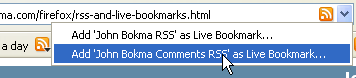
For instance, in Firefox's "Live Bookmarks" feature, when the browser comes across the following in the page HTML

<link rel="alternate" type="application/rss+xml" title="John Bokma RSS" href="/index.rss">

This link is interpreted as a feed URL. The availbility of the feed is presented to the user as an icon in the address bar

Ultimately, a blog's best bet is probably to use both models for feed URL discovery, allowing users to search on their own through consistent placement of a link as well as taking advantage of automated mechanisms.

Likewise for identity discovery perhaps? Allow for both models?

Different identity systems assume differing levels of involvement from their users for the discovery of their identity attributes. Some systems presume that the user will play an active role, manually providing the address of their identity provider when asked, others place greater emphasis on automated mechanisms to match a requesting party to an appropriate identity provider, and others allowing for both options.

There will always be some users who know where every bit of their identity is distributed at any one moment, others for whom the prompt "Please indicate your Wallet Provider" would have them running to their kids for help.

Tuesday, February 21, 2006

Why do just about all Liberty demos emphasize alcohol?

I know why it's a significant focus of our meetings, but our demos ....?

Hubert le Van Gong has a post on a Sun demo of a Java applet implementation of an identity selector.

A user is visiting an online Wine Shop (as opposed to the gazillion other types of SPs that Hubert could have chosen) and the SP needs to know that the user is of an age allowed to buy booze.

The SP advertises this identity requirements to the applet, which then does a number of things:

1) uses Liberty WSF protocols to discover appropriate identity providers
2) allow the user to select the desired provider
3) interact with the chosen provider from #2 to retrieve the required identity data
4) hand the identity info from #3 to the SP.

The demo nicely demonstrates the support within the Liberty architecture for client-hosted functionality, here it's an identity selector and a client to network hosted identity services.

It also nicely continues the pattern established by the NTT demo of the 'Online Beer Shoppe'. Are we seeing a nascent market for federated identity rear its head?

I do wonder why Hubert didn't have the applet querying the user's nationality so that French customers wouldn't even be shown the plonk pages.

Sunday, February 19, 2006

What will your URI say about you?

The ZD Net Web 2.0 Explorer has a post on URL Hotties. Apparently, URLs can be beautiful, or not.

If people had URIs, would they be judged by the attractiveness of their identifiers?

I can see it now, "Well he was really cute and we had a great time together but I just couldn't get past his URI" or 'SWMU looking for SWFU, 20-30, athletic. Must be https for a trusting relationship'.

I guess beauty is in the eye of the resolver.

Friday, February 17, 2006

Identity Rights Agreements Quibbles

Phil Windley posts a position paper that he, Kaliya Hamlin, and Aldo Castaneda created for the W3C Workshop on Transparency and Usability of Web Authentication.

One paragraph caught my eye:
Relying parties requesting identity information would receive back a standard response indicating the IRA associated with that identity data. Proceeding with the transaction would be interpreted as agreeing to abide by the IRA requirement.
  1. The implication is that some sort of 2-phase negotiation would always occur - the RP asking for some bit of identity, the IDP indicating under what IRAs it would be releaased, and the RP then resubmitting its original request. If the RP were to submit its original request with a particular IRA referenced, the semantics would be 'This is how I intend to use, store, protect the identity should you release it to me' and no such negotiation would be necessary.

  2. Also implied is that the RP's commitment to agreeeing to abide by the IRA returned by the IDP would be implicit, determined from its choosing to resend the original request. This wouldn't be sufficient, subsequent audits would almost certainly require an explicit 'OK, I am re-submitting my request under IRA X'
Granted that this level of pedantry over unstated details is completely unfair when reading a position paper.

The position paper also argues for a Service Provider Reputation Network, a mechanism to ensure SPs abide by the IRAs through social pressure. What isn't clear to me from the paper is who scores the SPs, i.e. who tarnishes their reputation when they mishandle identity information - the users whose identity data was misused or the IDPs who released it.

Friday, February 10, 2006

For gladiators, size did matter

Peter Davis and I, along with other Liberty colleagues Conor Cahill and Steve Anderson, spent the day wandering around ancient Pompeii.

One particularly interesting bit was the colliseum. At dinner afterwards, Peter and I were discussing how large we thought the Pompeii version was relative to its more famous Roman cousin.

Peter guessed that the actual 'playing field' was around 100m across. I said, 'No, that's too big, more like 70m'.

Google Earth helped determine the winner (modesty prevents me from explicitly calling it out)

Tuesday, February 07, 2006

Roman hospital(ity)

Old Roman guy from the 16th century convinced us to buy questionably dated lamb for dinner the other night. Bought it and was happy. Hellmuth slipped him some euros for his trouble. He slipped us some bad basement champagne for ours. Much frivolity, far more than the morning after.

Friday, February 03, 2006

Identity Ro(a)ming

Used Google Earth to take a pic of the hotel in Rome where next week's Liberty Alliance meeting will be held. Triangulated in from the Vatican and St. Peters.


Pool looks cold, they must not have yet retrieved my temperature preferences from my profile.

Tear down

Wired has an article on how car manufactures routinely tear down the cars of their competition for the insights on manufacturing, costs, etc they can obtain from the carcas.

Reminds me of the process advocates of particular identity systems engage in when looking at the 'competition'.

What is promising is that, more and more, the analyses that we perform, and the conversations we have, include attempts at understanding how the different systems might be compatible.

I don't think GM and Toyota spend much time on worrying about the "auto metasystem" and how their cars might interoperate.